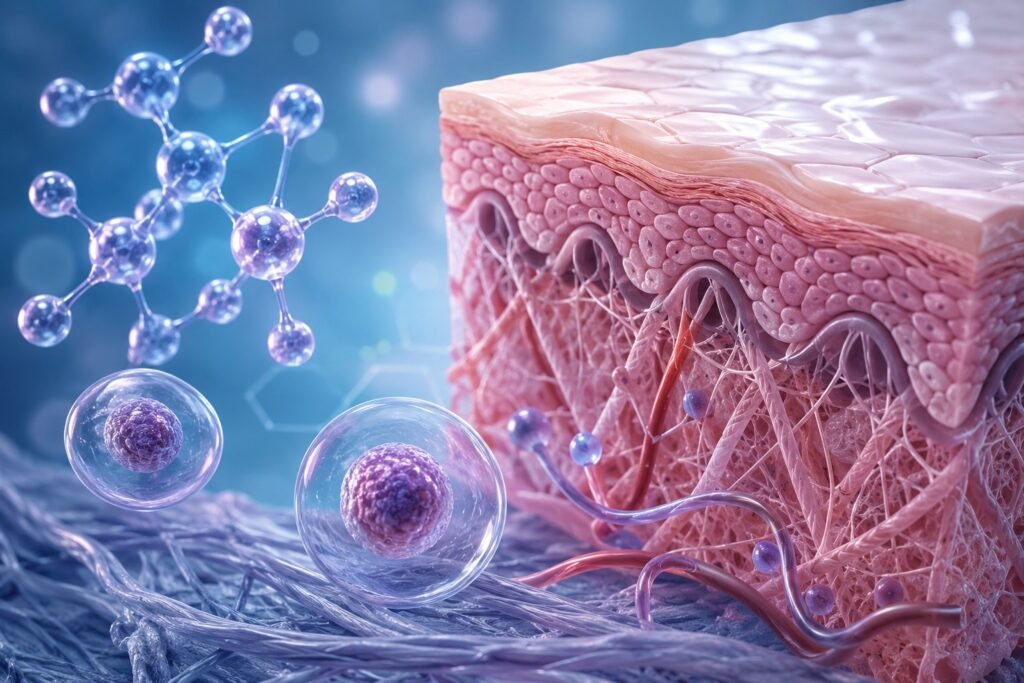
Peptides in Dermal Regeneration Research Models
Research Use Only — All peptides discussed in this article are intended exclusively for laboratory, in vitro, and preclinical research […]




Research Use Only — All peptides discussed in this article are intended exclusively for laboratory, in vitro, and preclinical research […]

Research Use Only — GLP-3 is intended exclusively for laboratory, in vitro, and preclinical research applications. Not for human or

Research Use Only — GLP-2 is intended exclusively for in vitro and preclinical research. Not for human or veterinary consumption.

Research Use Only — GLP-1 is intended exclusively for in vitro and preclinical research. Not for human or veterinary consumption.

Research Use Only — BPC-157 is intended exclusively for in vitro and preclinical research. Not for human or veterinary consumption.

Mitochondria have long been described as the powerhouses of the cell. That description is not wrong, but it is incomplete.

There’s a strange irony in how misunderstood peptides are, given that they’ve been a cornerstone of biochemical research for decades.

Over the past two decades, peptide research has evolved from a niche branch of biochemistry into one of the most

Performance peptides have become a growing focus in scientific research, especially in fields like biochemistry, molecular biology, and biotechnology. While

Research peptides are widely used in biotechnology research, pharmaceutical studies, and laboratory experiments due to their precision and biological relevance. However, peptides