


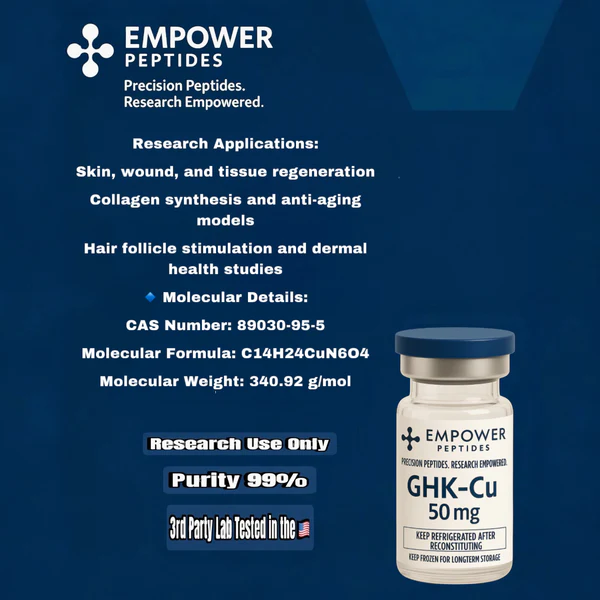
GHK-Cu – Recovery and Repair Peptide
Price range: $43.00 through $55.00

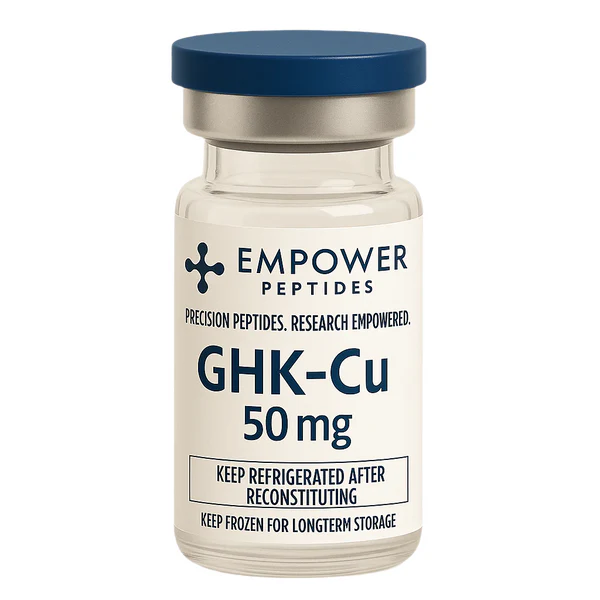
🔬 GHK-Cu
GHK-Cu is a copper-binding tripeptide studied in controlled laboratory environments for its role in cellular signaling, metal-ion interaction pathways, and extracellular matrix research models. Its structure—composed of glycine, histidine, and lysine—allows researchers to examine copper-peptide complexes across a wide range of experimental systems.
Lyophilized powder supplied in standard laboratory vials.
Not for injection. Not for clinical or therapeutic use.
📌 Product Specifications
- Form: Lyophilized Powder
- Amount: 10mg per vial
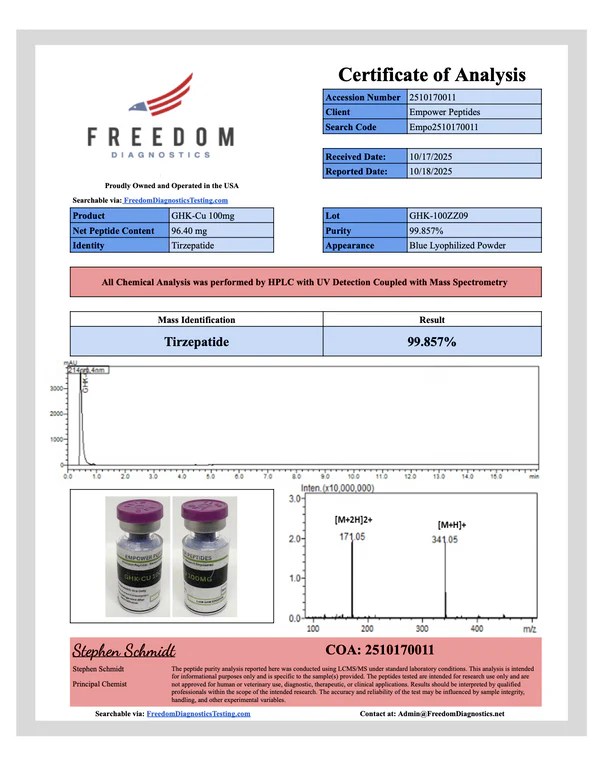
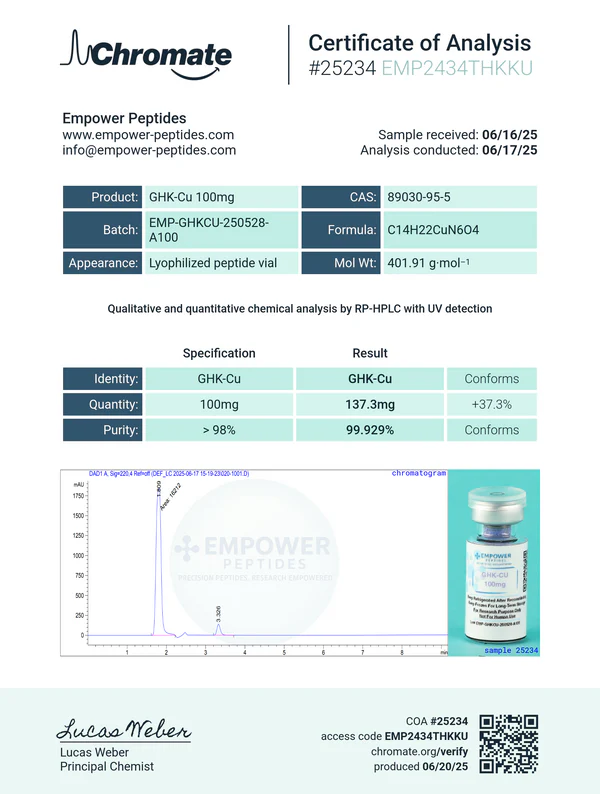
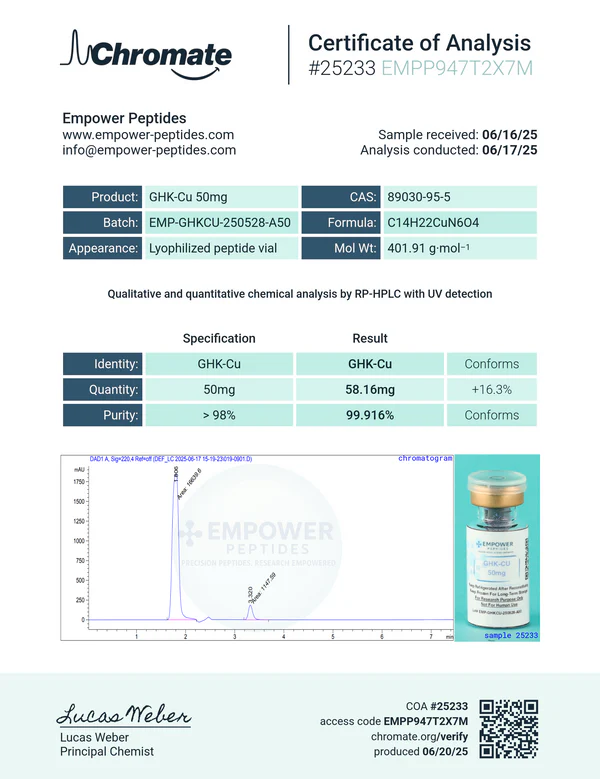
- Purity: ≥ 98%
- Appearance: Blue-green powder
- Storage: Store in a cool, dry place. Refrigerate after reconstitution.
🧪 Molecular Information
- Molecular Formula: C14H24CuN6O4
- Molecular Weight: 340.92 g/mol
- CAS Number: 89030-95-5
🔬 Research Applications
- Copper-peptide interaction models
- Extracellular matrix signaling studies
- Cellular response investigations involving metal-binding complexes
GHK-Cu may display limited solubility in Bacteriostatic Water alone. For improved dissolution, researchers often begin with a minimal volume of 0.6% Acetic Acid prior to dilution with Bacteriostatic Water. This approach may support smoother handling during preparation.
GHK-Cu – Frequently Asked Questions (Research Use Only)
This FAQ provides research-focused information about GHK-Cu, a copper-binding tripeptide supplied as a lyophilized laboratory material.
1. What is GHK-Cu?
GHK-Cu is a copper-binding tripeptide composed of glycine, histidine, and lysine complexed with copper. In laboratory settings, the ghk-cu peptide is studied for its relevance to cellular signaling pathways, metal-ion interaction models, and extracellular matrix research systems. It is supplied strictly as a research material and is not represented for clinical, therapeutic, cosmetic, or consumer use.
2. What does GHK-Cu contain?
Each vial contains 50/100mg of lyophilized GHK-Cu with a stated purity of ≥ 98%. The material appears as a blue-green powder. Relevant molecular data include Molecular Formula: C14H24CuN6O4, Molecular Weight: 340.92 g/mol, and CAS Number: 89030-95-5. These specifications support identification, cataloging, and laboratory documentation.
3. What is GHK-Cu peptide used for in research?
In controlled research environments, the ghk-cu peptide is commonly referenced in studies involving copper-peptide interaction models, extracellular matrix signaling investigations, and cellular response work involving metal-binding complexes. These uses are strictly experimental and non-clinical, supporting biochemical and in vitro analysis rather than any therapeutic or diagnostic application.
4. Why do researchers study copper-binding peptides?
Copper-binding peptides are of interest in biochemical research because they can help model how metal ions interact with peptide structures under defined experimental conditions. Researchers may use compounds such as GHK-Cu to examine coordination behavior, signaling-related mechanisms, and extracellular matrix-associated pathways in non-clinical systems. This research language also aligns with search behavior around terms like empower ghk cu when users are seeking a laboratory-grade peptide reference rather than a consumer product.
5. What does ghk-cu powder mean in a laboratory setting?
The phrase ghk-cu powder refers to the lyophilized research presentation of the compound prior to laboratory reconstitution or analytical preparation. In this context, it indicates a dry, stabilized format intended for controlled handling, storage, and experimental workflow planning. It does not imply a dietary, cosmetic, or consumer-use product format.
| Weight | N/A |
|---|
Refer friends. Earn together
Invite your friends and earn a discount on your next purchase. Your friend also earns a discount! Get started now, by sharing your referral link with your friends.
Refer friends. Earn together
Invite your friends and earn a discount on your next purchase. Your friend also earns a discount! Get started now, by sharing your referral link with your friends.
Related products
- Recovery and Repair Peptides
BPC-157 – Recovery and Repair Peptide
Price range: $39.00 through $58.00 Select options This product has multiple variants. The options may be chosen on the product page
