


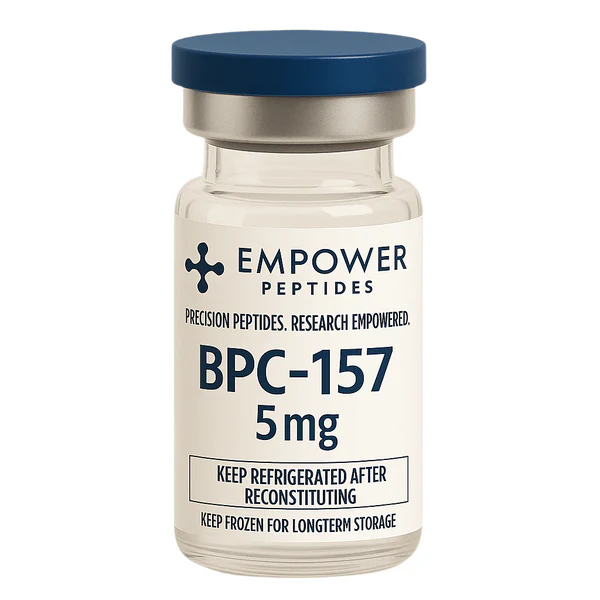
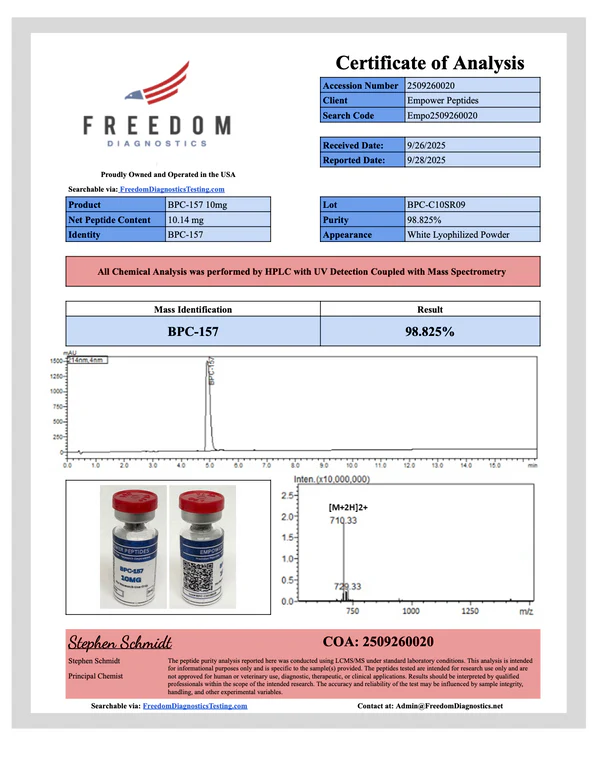
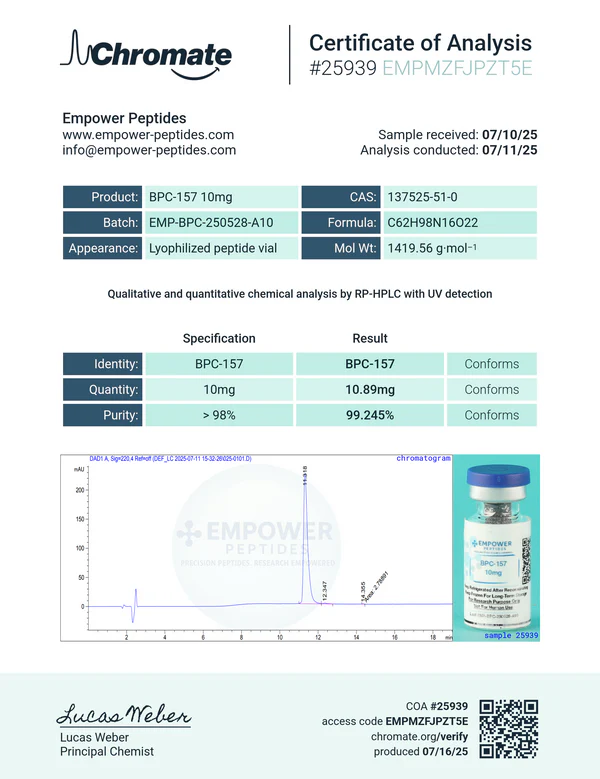
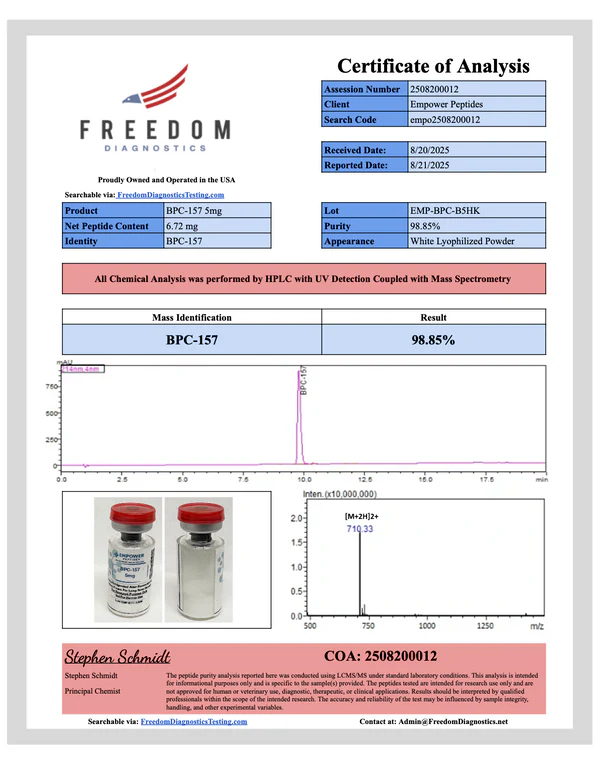
BPC-157 – Recovery and Repair Peptide
Price range: $36.00 through $78.00

Availability: In stock
BPC-157 is a synthetic research peptide derived from a partial sequence of a naturally occurring gastric protein. In laboratory settings, this compound is studied for its involvement in cellular processes related to tissue environments, structural protein activity, and model systems examining regenerative pathways. Supplied as a lyophilized powder, this material supports precise handling and controlled experimental conditions.
Lyophilized powder supplied in standard laboratory vials.
Not for injection. Not for clinical or therapeutic use.
Features:
- Lyophilized Format: Stable white powder suitable for controlled measurement and storage.
- Model System Compatibility: Utilized in laboratory settings evaluating structural protein activity.
- Sequence-Derived Peptide: Synthetic fragment modeled after a region of a naturally occurring protein.
Research Notes:
- Tissue Environment Models: Incorporated into experiments analyzing cell–matrix interactions.
- Angiogenic Pathway Studies: Used in research exploring vascularization mechanisms in controlled systems.
- Structural Protein Pathways: Examined in models related to collagen-associated processes.
BPC-157 provides researchers with a consistent tool for exploring peptide behavior in laboratory systems focused on structural and cellular dynamics. Store in a cool, dry place. This product is intended solely for laboratory research use only.
🔬 Interested in the Science?
Explore literature discussions, model-system findings, and peptide research pathways.
🔬 Research Applications
- Cell–matrix interaction studies
- Angiogenic pathway experiments
- Models evaluating collagen-associated processes
🧪 Molecular Details
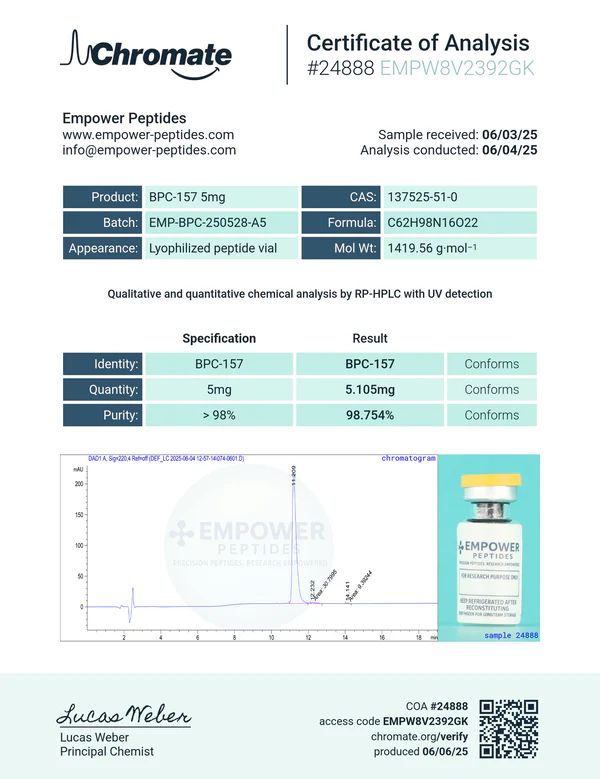
- CAS Number: 137525-51-0
- Molecular Formula: C62H98N16O22
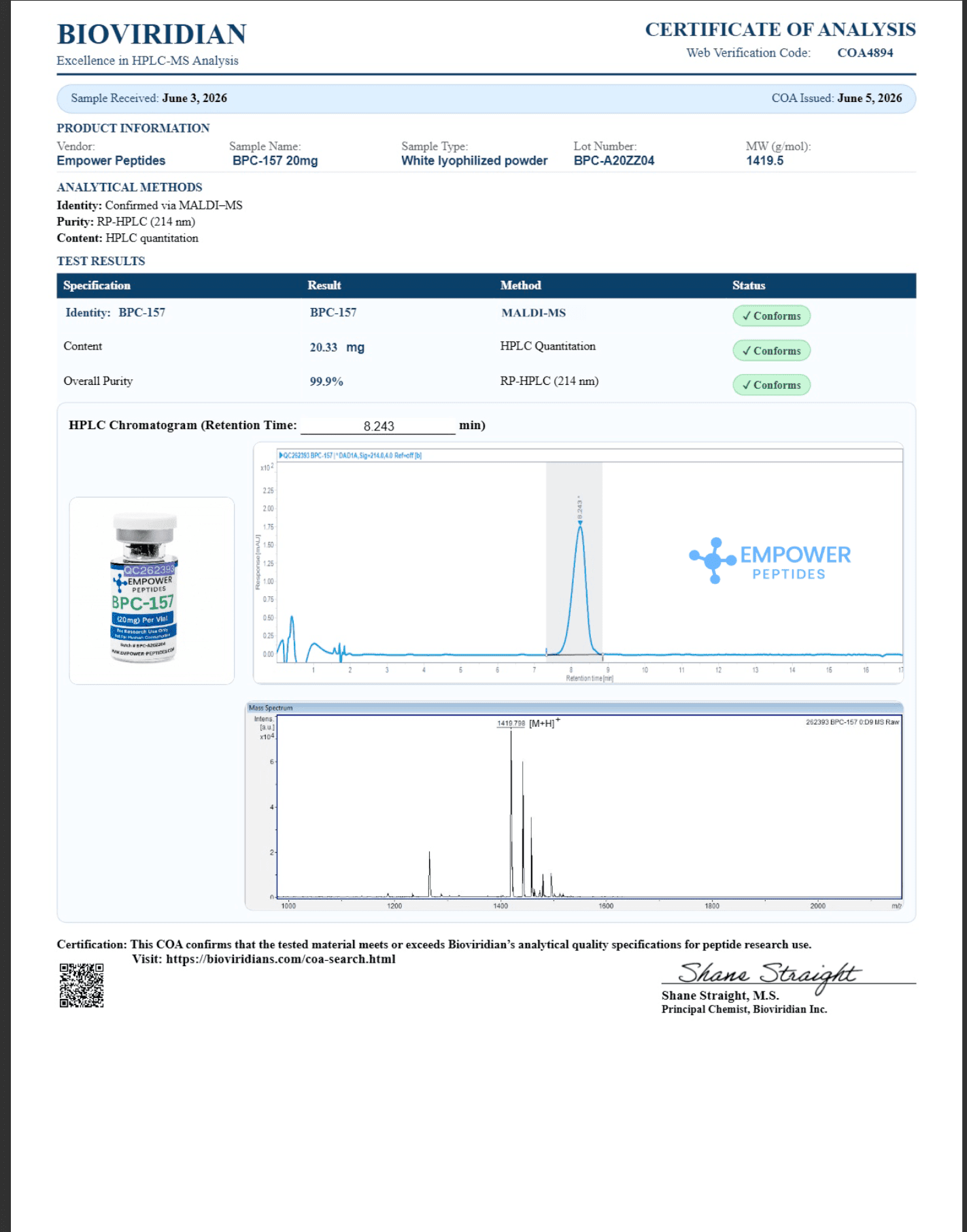
- Molecular Weight: 1419.55 g/mol
- Form: Lyophilized Powder
- Appearance: White Powder
- Storage: Store in a cool, dry place.
BPC-157 – Frequently Asked Questions (Research Use Only)
This FAQ provides structured, research-focused information about BPC-157, a synthetic peptide supplied as a lyophilized powder for controlled laboratory environments.
1. What is BPC-157?
BPC-157 is a synthetic research peptide derived from a partial sequence of a naturally occurring gastric protein. It is studied in laboratory settings for its role in cellular processes and structural protein-related pathways.
2. What does BPC-157 contain?
BPC-157 is supplied as a high-purity peptide with molecular formula C62H98N16O22, molecular weight 1419.55 g/mol, and CAS number 137525-51-0. It appears as a white lyophilized powder.
3. What is BPC-157 used for in research?
BPC-157 is used in non-clinical research involving cell–matrix interaction models, angiogenic pathway studies, and investigations into structural protein activity within controlled experimental systems.
4. Why do researchers study BPC-157 in tissue-environment and structural protein models?
Researchers examine BPC-157 to explore cellular environments, collagen-associated processes, and interactions between peptides and structural proteins in laboratory models designed for pathway analysis.
5. What does lyophilized BPC-157 powder mean in a laboratory setting?
Lyophilized BPC-157 powder refers to a freeze-dried format that enhances stability, enables accurate measurement, and supports reproducible handling in research workflows.
| Weight | 0.20 oz |
|---|
Refer friends. Earn together
Invite your friends and earn a discount on your next purchase. Your friend also earns a discount! Get started now, by sharing your referral link with your friends.
Refer friends. Earn together
Invite your friends and earn a discount on your next purchase. Your friend also earns a discount! Get started now, by sharing your referral link with your friends.
Related products
- Metabolic Research Peptides
CAGRI – Metabolic Research Peptide
Price range: $84.00 through $130.00 Select options This product has multiple variants. The options may be chosen on the product page - Cognitive and Longevity Peptides
Selank – Cognitive and Longevity Peptide
Price range: $30.00 through $50.00 Select options This product has multiple variants. The options may be chosen on the product page
