


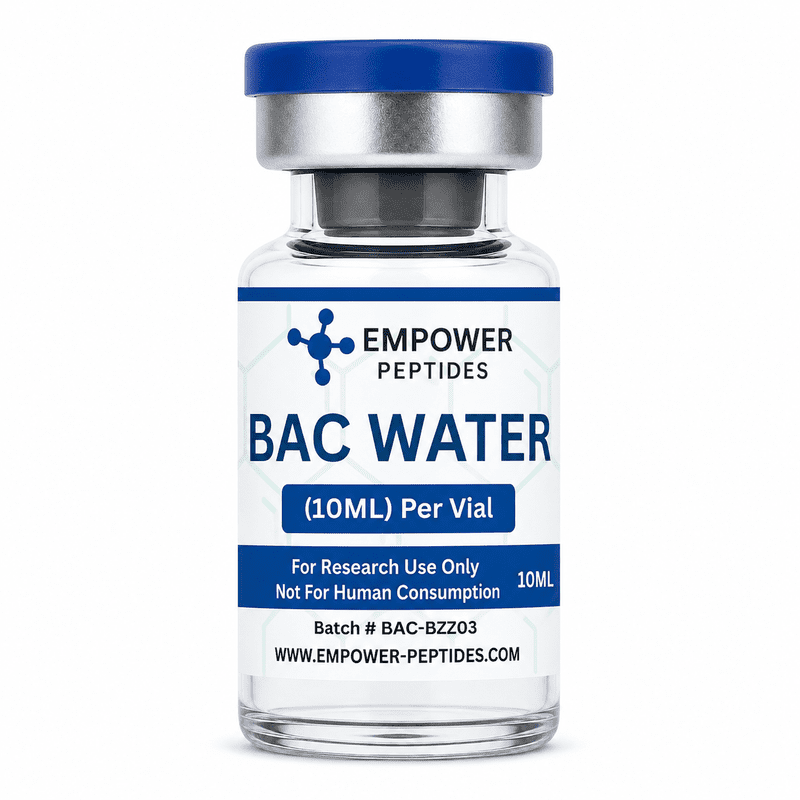
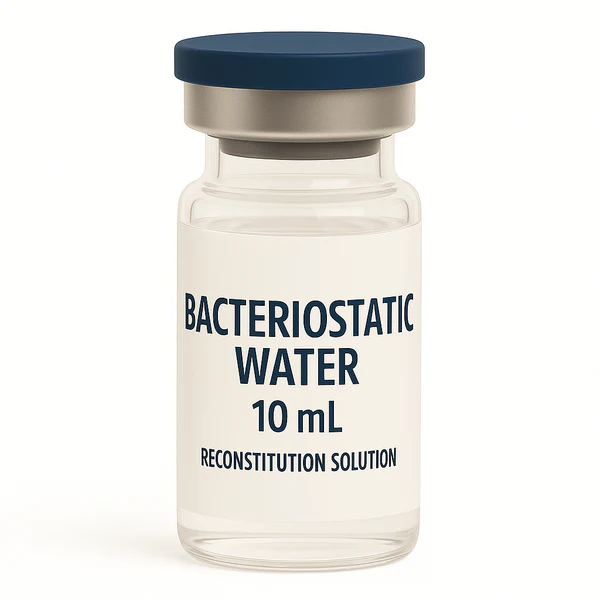
Bacteriostatic Water (BAC) 10mL
$10.75
Availability: In stock
This laboratory aqueous solution contains water with 0.9% benzyl alcohol, prepared for use in research settings where a preserved diluent is required. Its composition supports controlled laboratory workflows involving dilution, solution preparation, and general experimental procedures.
Supplied in standard laboratory reagent vials.
Not sterile for injection. Not for injection. Not for clinical or therapeutic use.
Features:
- Preserved Aqueous Solution: Contains 0.9% benzyl alcohol to inhibit microbial growth within laboratory environments.
- Clear, Colorless Liquid: Allows for accurate visual inspection during handling and preparation.
- Room-Temperature Stability: Suitable for controlled laboratory storage conditions.
Research Notes:
- General Diluent: Used in laboratory settings requiring a preserved solution for experimental workflows.
- Solution Preparation: Applicable where controlled aqueous environments are needed.
- Handling Consideration: Avoid contamination during use; recap immediately after dispensing.
This preserved aqueous reagent provides a dependable option for laboratory workflows involving dilution and solution preparation. Store at controlled room temperature. Intended solely for laboratory research use only.
🧪 Product Specifications
- Form: Aqueous solution with preservative
- Appearance: Clear, colorless liquid
- Composition: Water with 0.9% benzyl alcohol (9 mg/mL)
- Storage: Store at 20–25°C (room temperature)
Bacteriostatic Water (BAC) 10mL– Laboratory Use & Specifications FAQ
This FAQ provides structured information regarding the application, preservation, and handling of Bacteriostatic Water used as a diluent in controlled laboratory research environments.
1. What is Bacteriostatic Water (BAC) used for in laboratory research?
Bacteriostatic Water is used as a preserved aqueous diluent in laboratory settings. It supports workflows involving solution preparation, compound dilution, and experimental procedures where microbial growth needs to be minimised.
2. What is the role of benzyl alcohol in Bacteriostatic Water?
The 0.9% benzyl alcohol acts as a preservative by inhibiting microbial growth within the solution. This helps maintain stability and reduces contamination risk during repeated use in controlled laboratory environments.
3. How is Bacteriostatic Water different from sterile or distilled water?
Unlike standard distilled or purified water, Bacteriostatic Water contains a preservative (benzyl alcohol). This makes it more suitable for multi-use laboratory applications where maintaining solution integrity over time is important.
4. How should Bacteriostatic Water be stored and handled in the lab?
It should be stored at room temperature (20–25°C) and kept sealed when not in use. To maintain quality, researchers should avoid contamination by using proper lab techniques and recapping the vial immediately after dispensing.
5. Can Bacteriostatic Water be used for medical or injection purposes?
No. This product is intended strictly for laboratory research use only. It is not approved for injection, clinical procedures, or human use under any circumstances.
| Weight | 0.02 oz |
|---|
Refer friends. Earn together
Invite your friends and earn a discount on your next purchase. Your friend also earns a discount! Get started now, by sharing your referral link with your friends.
Refer friends. Earn together
Invite your friends and earn a discount on your next purchase. Your friend also earns a discount! Get started now, by sharing your referral link with your friends.
Related products
- Growth and Performance Peptides
Ipamorelin – Growth and Performance Peptide
Price range: $38.00 through $53.00 Select options This product has multiple variants. The options may be chosen on the product page - Metabolic Research Peptides
GLP-3 – Metabolic Research Peptide
Price range: $75.00 through $157.00 Select options This product has multiple variants. The options may be chosen on the product page - Metabolic Research Peptides
CAGRI – Metabolic Research Peptide
Price range: $84.00 through $130.00 Select options This product has multiple variants. The options may be chosen on the product page

