


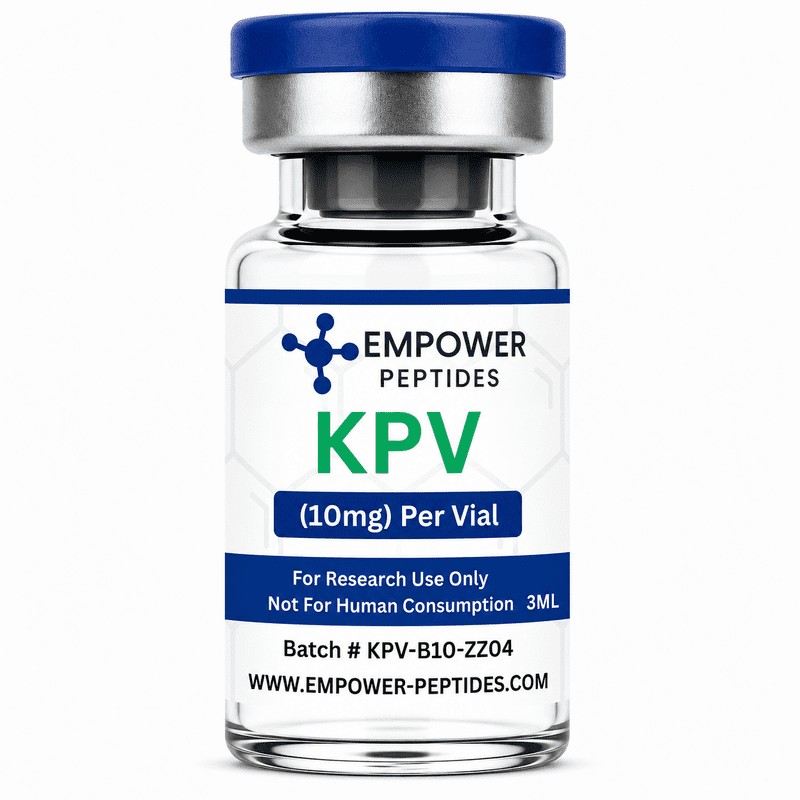
KPV – Recovery and Repair Peptide
$45.00
Availability: In stock

Availability: In stock
KPV – Research-Grade Tripeptide (10mg)
KPV is a synthetic tripeptide fragment commonly utilized in laboratory research to investigate peptide–receptor signaling pathways and cellular regulatory mechanisms. It is frequently examined in controlled models assessing epithelial integrity, cytokine pathway signaling, and melanocortin-related biochemical interactions.
📌 Product Specifications
- Form: Lyophilized Powder
- Amount: 10mg per vial
- Appearance: White Powder
- Storage: Store in a cool, dry place. Refrigerate after reconstitution.
🔬 Research Applications
- Cytokine pathway signaling investigations
- Epithelial barrier and cellular integrity modeling
- Melanocortin receptor interaction studies
🧪 Molecular Details
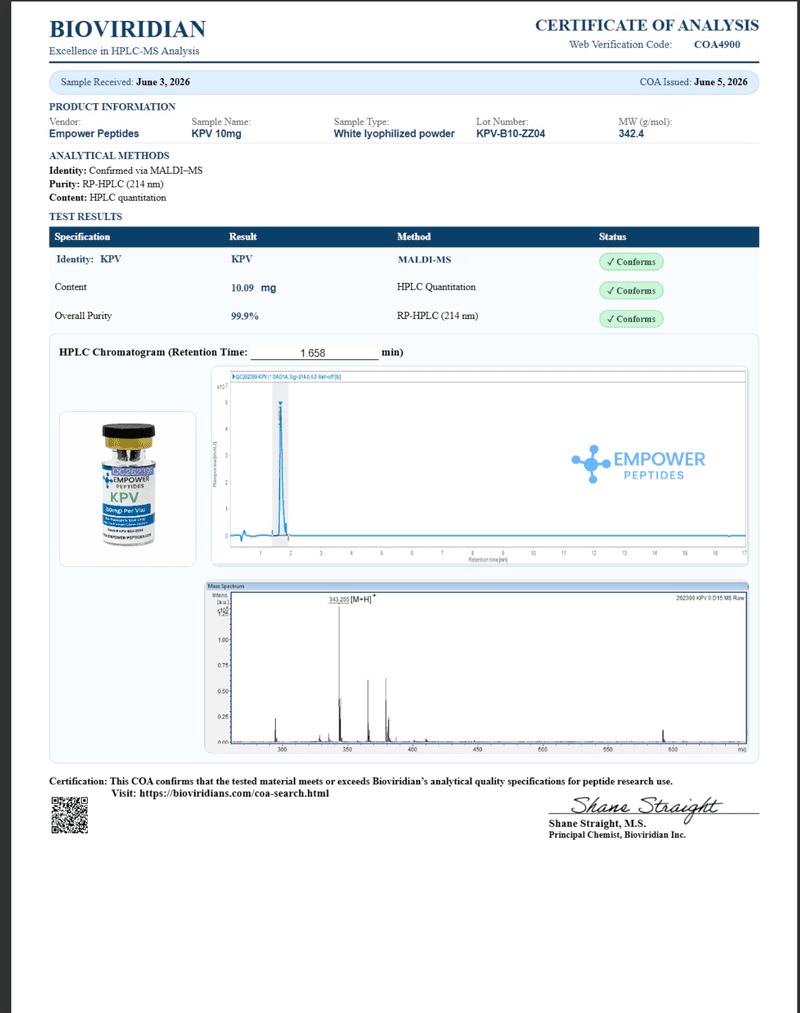
- CAS Number: 868514-64-1
- Molecular Formula: C19H32N6O5
- Molecular Weight: 424.5 g/mol
💡 Interested in the Science?
Explore how this tripeptide is examined within modern research frameworks, including receptor signaling, pathway interactions, and cellular modeling studies.
KPV – Recovery and Repair Peptide FAQ
This FAQ provides structured technical information regarding the signaling mechanisms, molecular identifiers, and laboratory handling of KPV within controlled research environments.
1. What type of peptide is KPV in research settings?
KPV is a synthetic tripeptide used in controlled laboratory environments to study cellular communication processes. It is primarily investigated for its role in peptide signaling mechanisms and regulatory biological pathways in non-clinical research models.
2. Why is KPV studied in cytokine-related research?
KPV is frequently included in cytokine pathway research because it allows scientists to observe signaling interactions linked to inflammatory and regulatory responses at a cellular level. It is used as a tool for analyzing pathway behavior under controlled experimental conditions.
3. What is the significance of the 10mg vial format?
The 10mg per vial presentation provides a standardized quantity for laboratory use, enabling consistent measurement and reproducibility in experimental setups. This format supports precise handling in research protocols requiring controlled peptide dosing.
4. What are the handling requirements for KPV in the lab?
KPV should be handled under standard laboratory conditions, kept in a cool, dry environment before reconstitution. Once prepared, refrigeration is recommended to maintain structural stability during research applications and experimental use cycles.
5. What molecular identifiers are associated with KPV?
KPV is identified by CAS Number 868514-64-1, with a molecular formula of C19H32N6O5 and a molecular weight of 424.5 g/mol. These identifiers are used for compound verification, documentation, and consistency in laboratory research studies.
| Weight | 0.02 oz |
|---|
Refer friends. Earn together
Invite your friends and earn a discount on your next purchase. Your friend also earns a discount! Get started now, by sharing your referral link with your friends.
Refer friends. Earn together
Invite your friends and earn a discount on your next purchase. Your friend also earns a discount! Get started now, by sharing your referral link with your friends.
Related products
- Cognitive and Longevity Peptides
MOTS-c – Cognitive and Longevity Peptide
Price range: $45.00 through $105.00 Select options This product has multiple variants. The options may be chosen on the product page - Skin and Aesthetic Peptides
Glow Blend – 70mg (10mg TB-500 + 10mg BPC-157 + 50mg GHK-Cu) – Skin and Aesthetic Peptide
$75.00 Add to cart
