


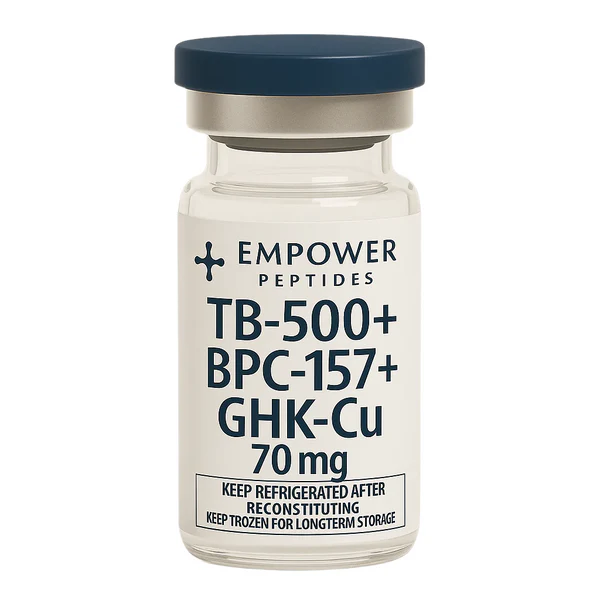
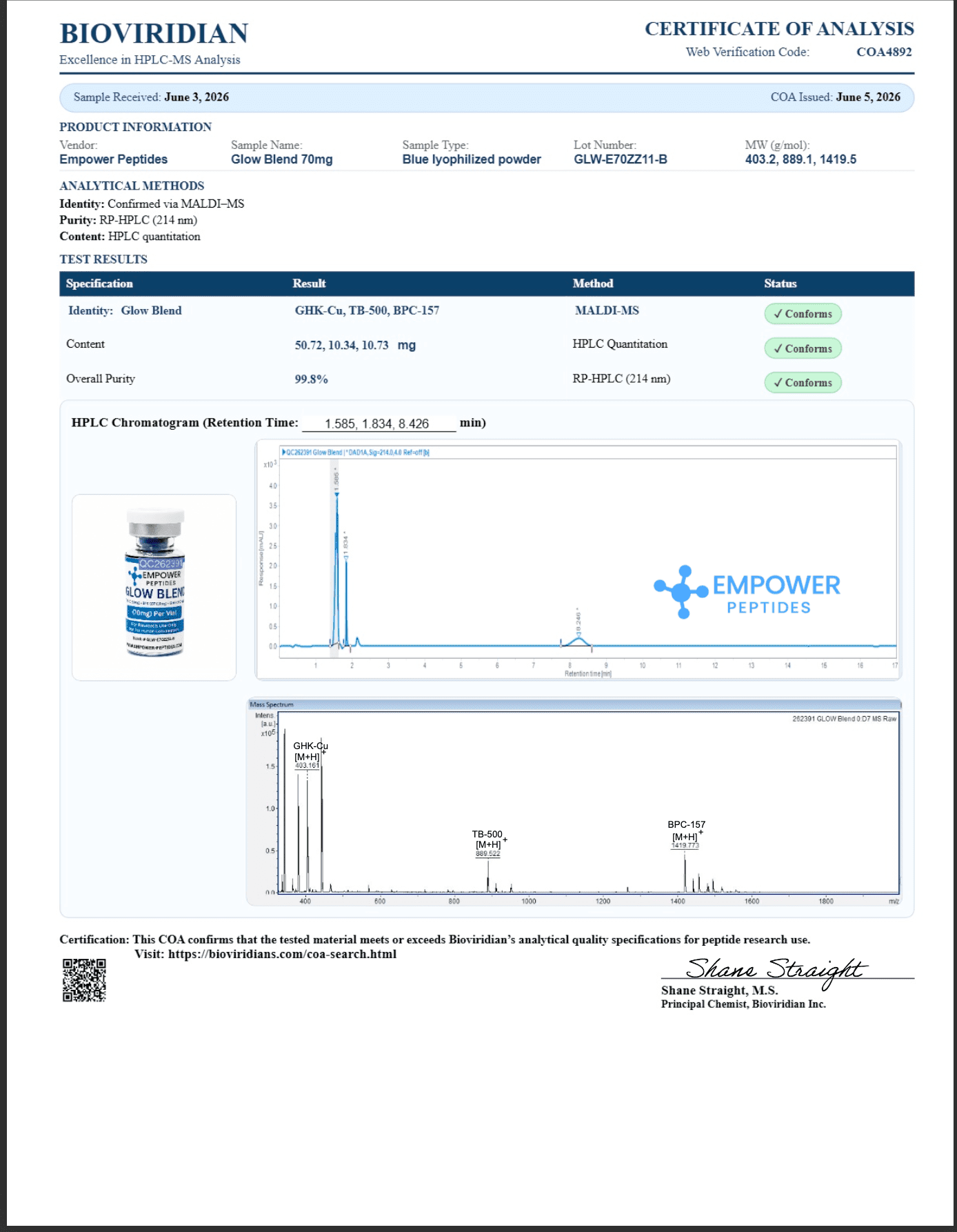
Glow Blend – 70mg (10mg TB-500 + 10mg BPC-157 + 50mg GHK-Cu) – Skin and Aesthetic Peptide
$75.00
Availability: In stock
Glow Blend (TB-500 · BPC-157 · GHK-Cu)
Glow Blend is a laboratory peptide mixture designed for controlled research involving peptide–matrix interactions, extracellular signaling pathways, and structural protein investigation. This blend contains TB-500, BPC-157, and GHK-Cu, combined to allow researchers to examine multi-pathway activity within the same experimental model.
Lyophilized powder supplied in standard laboratory vials.
Not for injection. Not for clinical or therapeutic use.
🔹 Product Specifications
- Form: Lyophilized Powder Blend
- Appearance: Blue-Purple mixed powder
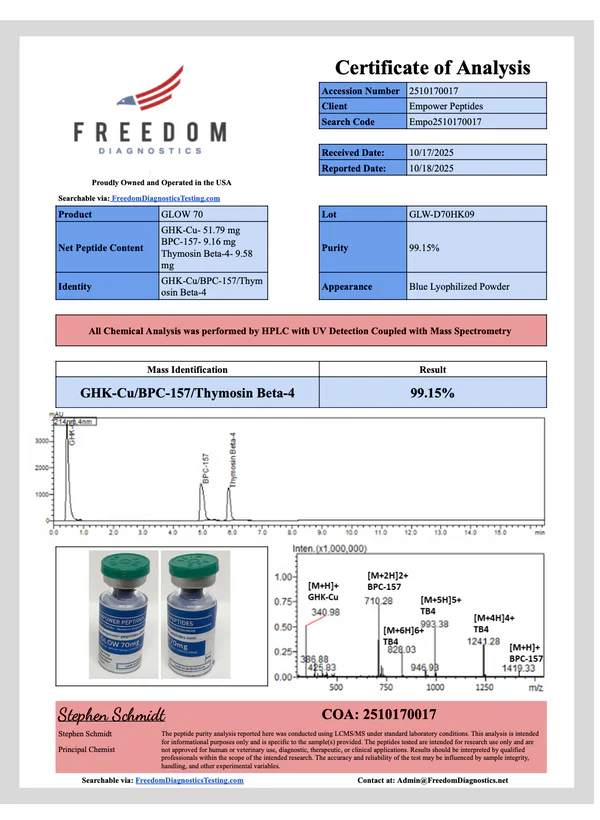
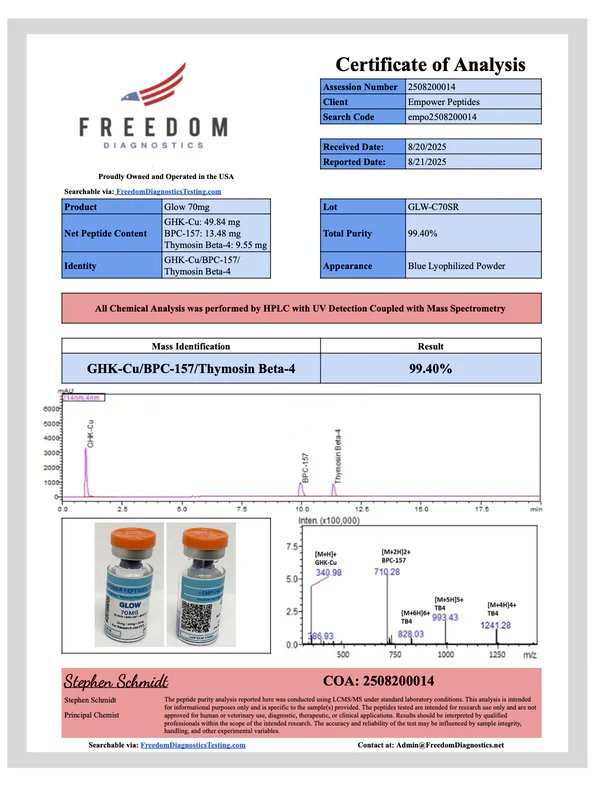
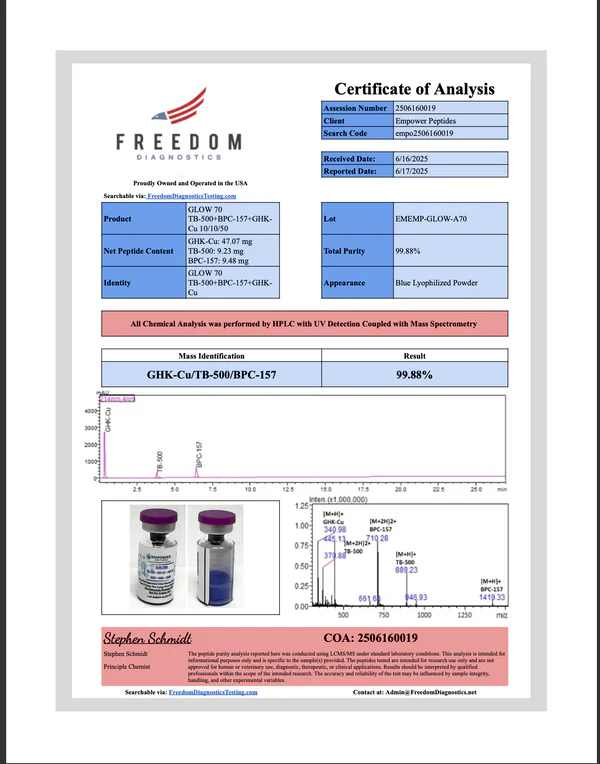
- Purity: ≥ 98% (combined constituents)
- Storage: Store in a cool, dry place. Refrigerate after reconstitution.
🧪 Molecular Information (Individual Components)
- BPC-157 (10mg)
CAS: 137525-51-0
Molecular Formula: C62H98N16O22
Molecular Weight: 1419.54 g/mol
- TB-500 (Thymosin Beta-4 Fragment) (10mg)
CAS: 77591-33-4
Molecular Formula: C212H350N56O78S
Molecular Weight: 4963.49 g/mol
- GHK-Cu (50mg)
CAS: 89030-95-5
Molecular Formula: C14H24CuN6O4
Molecular Weight: 340.92 g/mol
🔬 Research Applications
- Extracellular matrix and structural protein modeling
- Peptide–cell signaling pathway investigations
- In-vitro studies involving multi-peptide interaction dynamics
💡 Interested in the Science?
Explore how peptide blends are evaluated in research involving structural proteins, extracellular signaling, and pathway interaction modeling.
Glow Blend – 70mg (10mg TB-500 + 10mg BPC-157 + 50mg GHK-Cu) – Frequently Asked Questions (Research Use Only)
This FAQ provides structured, research-focused information about Glow Blend, a multi-peptide formulation designed for controlled laboratory environments.
1. What is Glow Blend?
Glow Blend is a laboratory peptide mixture containing TB-500 (10mg), BPC-157 (10mg), and GHK-Cu (50mg), totaling 70mg. It is supplied as a lyophilized powder for controlled research applications.
2. What is the Glow Blend peptide used for in research?
The glow blend peptide is used in non-clinical laboratory studies involving extracellular matrix modeling, peptide signaling pathways, and investigations into multi-peptide interaction dynamics.
3. Why do researchers study multi-peptide blends in extracellular matrix models?
Multi-peptide blends allow researchers to evaluate interactions across multiple pathways simultaneously, offering insight into complex biochemical signaling and structural protein environments within controlled experimental systems.
4. What does glow ghk-cu tb-500 bpc-157 refer to?
The phrase glow ghk-cu tb-500 bpc-157 refers to the combined peptide composition within Glow Blend, representing its three core components used for laboratory research applications.
5. What does glow peptide price mean in a research catalog context?
Glow peptide price reflects a catalog-style search phrase related to laboratory material sourcing. It should be interpreted within a research procurement context, not as a consumer or clinical product reference.
| Weight | 0.02 oz |
|---|
Refer friends. Earn together
Invite your friends and earn a discount on your next purchase. Your friend also earns a discount! Get started now, by sharing your referral link with your friends.
Refer friends. Earn together
Invite your friends and earn a discount on your next purchase. Your friend also earns a discount! Get started now, by sharing your referral link with your friends.
Related products
- Metabolic Research Peptides
CAGRI – Metabolic Research Peptide
Price range: $84.00 through $130.00 Select options This product has multiple variants. The options may be chosen on the product page

