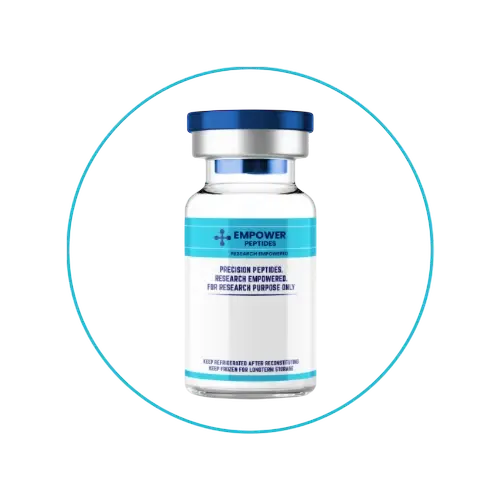


GLP-1 Research Grade Metabolic Peptide | Glucose & Appetite Regulation Compound
Research Use Only — GLP-1 is intended exclusively for in vitro and preclinical research. Not for human or veterinary consumption.
GLP-1 (Glucagon-Like Peptide-1) is a research-grade incretin hormone synthesized primarily in the L-cells of the distal small intestine and colon. It occupies a unique position in modern endocrinology — sitting at the intersection of pancreatic function, central appetite control, and cardiovascular homeostasis in a way that continues to drive productive scientific investigation.
GLP-1 is derived from the proglucagon gene through post-translational processing and is released in response to nutrient ingestion, particularly meals rich in carbohydrates and fats. Its short circulating half-life under physiological conditions — roughly two minutes in vivo — due to rapid degradation by dipeptidyl peptidase-4 (DPP-4) makes research-grade synthetic preparations essential for reproducible preclinical and in vitro study models.
What Is GLP-1?
The biologically active forms of GLP-1 — GLP-1(7-36) amide and GLP-1(7-37) — are structurally distinct peptides encoded by the same proglucagon gene that produces glucagon and GIP precursors. Tissue-specific cleavage in intestinal L-cells produces a peptide with a markedly different biological profile from its gene-sharing counterparts.
Research-grade GLP-1 compounds are synthesized using solid-phase peptide synthesis (SPPS) and characterized for sequence fidelity via HPLC and mass spectrometry. Enzymatic cleavage at the N-terminal alanine residue by DPP-4 renders the native peptide metabolically labile — which is precisely why synthetic preparations engineered for stability have become essential tools in both clinical and preclinical research contexts. Empower Peptides supplies GLP-1 compounds meeting the purity thresholds expected for serious in vitro and ex vivo applications.
Mechanisms Under Investigation
The actions of GLP-1 are mediated through the GLP-1 receptor (GLP-1R), a class B G-protein-coupled receptor with broad tissue expression — pancreatic beta cells, cardiac tissue, renal cortex, lung epithelium, and multiple brain regions. The following mechanisms are studied in peer-reviewed metabolic and endocrine research:
Glucose-Dependent Insulin Secretion — Pancreatic Beta Cell Pathway
GLP-1R activation in beta cells amplifies insulin secretion only in the presence of elevated intracellular glucose, via Gs-protein coupling, adenylyl cyclase activation, and cAMP-PKA cascade signaling. At euglycemic conditions, exocytosis of insulin granules is not independently triggered — a mechanistic safeguard that distinguishes GLP-1 from earlier insulin secretagogues and defines its research value in glycemic regulation models.
Glucagon Suppression — Alpha Cell Modulation
Concurrent with insulinotropic effects, GLP-1R activation in pancreatic alpha cells suppresses glucagon secretion in a glucose-dependent manner. Somatostatin-mediated paracrine pathways from delta cells appear to play an intermediary role — an area of active mechanistic investigation — with the net result being a well-replicated dual reduction in fasting and postprandial hyperglycemia across preclinical species.
Appetite Regulation — Vagal Afferent and Central Pathway Signaling
GLP-1Rs expressed on vagal afferent neurons transduce luminal and portal nutrient signals to the nucleus tractus solitarius (NTS) in the brainstem. Ascending projections modulate hypothalamic circuits including arcuate and paraventricular nucleus POMC and AgRP neuronal populations — master regulators of energy balance. Intracerebroventricular GLP-1 administration in rodent models produces robust reductions in food intake, confirmed by selective GLP-1R antagonism with exendin(9-39).
Gastric Emptying Delay — Ileal Brake Effect
Peripheral GLP-1R signaling delays gastric emptying through enteric nervous system modulation, contributing to postprandial satiety and blunting glucose excursions. This ileal brake effect — whereby distal nutrient presence slows proximal gut motility — has been characterized in both human and rodent models and is a key variable in experimental appetite and metabolic research designs.
Cardioprotective Signaling — PKA and PI3K/Akt Pathways
GLP-1Rs expressed in cardiomyocytes and vascular endothelium have been implicated in direct cardioprotective signaling independent of glycemic improvement. In preclinical ischemia-reperfusion models, receptor activation is associated with reduced infarct size and improved functional recovery via PKA-mediated phosphorylation of cardioprotective targets, anti-apoptotic PI3K/Akt signaling, and modulation of mitochondrial permeability transition.
Research Applications and Study Models
GLP-1 has relevance across several interconnected fields of metabolic, endocrine, and translational research. Below are the primary investigative contexts where this incretin peptide is studied:
Pancreatic Function & Glycemic Regulation
Glucose-dependent insulin secretion models, alpha cell glucagon suppression, beta cell preservation studies, and GLP-1R pharmacology in type 2 diabetes preclinical protocols.
Central Appetite & Neuroprotection Research
Hypothalamic and brainstem appetite circuit modulation, POMC/AgRP neuronal interaction studies, neuroinflammation models, hippocampal and basal ganglia GLP-1R signaling, and preclinical neurodegeneration research.
Cardiometabolic & Ischemia Models
Ischemia-reperfusion injury models, infarct size reduction studies, cardioprotective PKA and PI3K/Akt pathway research, and vascular endothelial GLP-1R signaling independent of glycemic endpoints.
Hepatic Lipid Metabolism
GLP-1R-mediated reductions in hepatic steatosis markers, NAFLD animal model studies, hepatic lipid metabolism pathway investigation, and emerging mechanistic research into liver-specific receptor signaling.
Renal Tubular Function
Emerging preclinical data on GLP-1R-mediated effects on renal cortex signaling, tubular function modulation, and renoprotective mechanisms in metabolic disease models.
Appetite & Energy Balance Modeling
Gastric emptying kinetics, postprandial glucose excursion modeling, central versus peripheral satiety pathway differentiation using vagotomy and CNS-restricted receptor knockout protocols.
Research-Grade GLP-1 from Empower Peptides
Each GLP-1 compound from Empower Peptides is synthesized to analytical standards appropriate for serious mechanistic work — with full lot-specific documentation, HPLC purity data, and mass spectrometry confirmation supplied as standard. GLP-1 is a 30-amino acid peptide whose biological activity is contingent on structural integrity, particularly at the N-terminus governing receptor binding affinity and agonist potency.
| Catalog Name | GLP-1 (Glucagon-Like Peptide-1) |
| Peptide Length | 30 amino acids |
| Active Forms | GLP-1(7-36) amide / GLP-1(7-37) |
| Synthesis Method | Solid-phase peptide synthesis (SPPS) |
| Purity Verification | HPLC-tested, mass spectrometry confirmed |
| Documentation | Batch-specific Certificate of Analysis (CoA) |
| Reconstitution | Bacteriostatic water or sterile PBS (pH 7.4) |
| Storage (Lyophilized) | -20°C or -80°C long-term |
| Storage (Working Solution) | On ice; use within same experimental session |
| Intended Use | In vitro and preclinical research only |
| Regulatory Status | Not for human or veterinary use |
Frequently Asked Questions — GLP-1 Peptide
What makes GLP-1 suitable for metabolic and endocrine research?
GLP-1 acts at the intersection of pancreatic insulin secretion, central appetite regulation, cardiovascular signaling, and peripheral metabolic function — making it one of the more scientifically productive and multi-system targets in current metabolic research. Its glucose-dependent mechanism also provides a built-in specificity that distinguishes it from earlier secretagogues.
Why is the N-terminus so important in GLP-1 preparations?
The N-terminal alanine residue is the primary site of DPP-4 cleavage and is critical for GLP-1R binding affinity and agonist potency. Sequence-related impurities, truncated fragments, or oxidized residues at this position can introduce significant confounding variables into dose-response and receptor binding kinetic studies.
What experimental design considerations apply to central versus peripheral GLP-1 effects?
Distinguishing central from peripheral contributions to appetite regulation requires selective vagotomy models, CNS-restricted receptor knockouts, and site-specific peptide administration protocols. This mechanistic complexity is part of what makes GLP-1 a productive area for rigorous experimental investigation.
How should researchers address adsorption losses at nanomolar concentrations?
At nanomolar working concentrations, significant losses to polypropylene and glass surfaces are possible. Adding BSA (0.1%) to working solutions or switching to low-binding tubes can mitigate adsorption. Aliquoting at the time of reconstitution and minimizing freeze-thaw cycles also protects compound integrity across experimental sessions.
Is GLP-1 available to research institutions through Empower Peptides?
Yes. Empower Peptides supplies research-grade GLP-1 to qualified laboratories, academic institutions, and licensed investigators. Full lot-specific documentation including Certificate of Analysis is provided to support reproducible, publication-ready research outcomes. In vivo use should be conducted under IACUC-approved protocols.
Disclaimer: GLP-1 (Glucagon-Like Peptide-1) is manufactured and distributed by Empower Peptides exclusively for scientific and preclinical research purposes. This product has not been evaluated by the Food and Drug Administration (FDA) or equivalent regulatory authorities. It is not intended for human consumption, is not a therapeutic drug, and must not be used as a dietary supplement. All research must be conducted by qualified investigators in compliance with applicable institutional, national, and international regulatory guidelines.