

BPC-157 | Research Grade Body Protection Peptide for Cellular Repair & Healing
Research Use Only — BPC-157 is intended exclusively for in vitro and preclinical research. Not for human or veterinary consumption.
BPC-157 (Body Protection Compound 157) is a research-grade synthetic pentadecapeptide consisting of 15 amino acids, derived from a naturally occurring protein found in human gastric juice. It has become one of the most studied peptides in regenerative biology, investigated across tissue repair, gastrointestinal protection, angiogenesis, and neurological research models.
BPC-157 is distinguished in the research space by its notable stability — particularly its resistance to enzymatic breakdown in gastric environments — making it a standardized and reproducible tool for both systemic and localized preclinical study models.
What Is BPC-157?
BPC-157 — short for Body Protection Compound 157 — is a synthetic peptide engineered from a fragment of a cytoprotective protein isolated from human gastric juice. Its full amino acid sequence is: Gly-Glu-Pro-Pro-Pro-Gly-Lys-Pro-Ala-Asp-Asp-Ala-Gly-Leu-Val.
Unlike many repair-associated peptides that degrade rapidly in biological environments, BPC-157 demonstrates exceptional stability — a characteristic that has made it particularly valuable for both systemic administration studies and local tissue application models. Its origins in Croatian pharmaceutical research during the early 1990s, led by Dr. Predrag Sikiric at the University of Zagreb, were rooted in gastrointestinal cytoprotection before researchers identified its broader multi-tissue activity profile.
Mechanisms Under Investigation
Understanding how BPC-157 exerts its effects across multiple tissue types is central to designing rigorous preclinical research protocols. The following mechanisms are studied in peer-reviewed regenerative and metabolic research:
Angiogenesis and Vascular Remodeling
BPC-157 research has consistently documented upregulation of VEGFR2 (vascular endothelial growth factor receptor 2), a central mediator of angiogenesis. By supporting new capillary formation from existing vasculature, it may help establish the vascular infrastructure that tissue repair depends on — potentially explaining its observed activity across diverse repair models.
Nitric Oxide Modulation
Several research groups have proposed that BPC-157 interacts with the nitric oxide (NO) signaling system — a critical network involved in vasodilation, immune response, and cellular communication. The relationship appears contextual rather than simply stimulatory or inhibitory, which may account for its observed effects across both inflammatory and ischemic research models.
Tendon and Ligament Fibroblast Activity
Among the earliest and most reproduced findings, BPC-157 research in rodent models has documented accelerated proliferation and migration of tendon fibroblasts — the cells responsible for collagen synthesis and connective tissue reconstruction after injury. This has made BPC-157 a recurring subject in orthopedic and sports medicine research contexts.
Gastrointestinal Mucosal Protection
Given its gastric origins, BPC-157 has been extensively studied in GI models — ranging from NSAID-induced gastric damage to inflammatory bowel and intestinal fistula models. The GI data represents the most robust and independently replicated body of evidence in the BPC-157 literature, with consistent protective effects on the mucosal lining observed across multiple research groups.
Neurological and CNS Pathway Research
More recent preclinical studies have explored BPC-157 in neuroscience contexts — including traumatic brain injury models, dopaminergic and serotonergic pathway modulation, and peripheral nerve regeneration. This body of work is at an earlier stage than the connective tissue and GI literature but represents a growing frontier of investigation.
Research Applications and Study Models
BPC-157 has relevance across several interconnected fields of regenerative and biochemical research. Below are the primary investigative contexts in which this peptide is studied:
Connective Tissue Repair
Tendon and ligament fibroblast proliferation, collagen synthesis acceleration, wound closure modeling, and bone fracture healing via osteoblast activity studies.
GI Mucosal Protection
NSAID-induced gastric damage models, inflammatory bowel disease research, intestinal fistula healing, and mucosal lining integrity studies.
Angiogenesis Research
VEGFR2 upregulation, capillary formation modeling, nitric oxide signaling dynamics, and vascular remodeling in ischemic tissue models.
CNS and Peripheral Nerve Models
Traumatic brain injury models, dopaminergic and serotonergic pathway modulation, peripheral nerve regeneration, and neuroprotective activity research.
Anti-Inflammatory Activity
Multi-tissue anti-inflammatory observations, cytokine modulation studies, and nitric oxide system interactions across systemic inflammatory disease models.
Skin Repair Research
Accelerated wound closure studies, tissue remodeling kinetics, angiogenesis in dermal repair models, and topical/local administration protocols.
Learn More: MOTS-c and Mitochondrial Signaling Research
Administration Routes in Research Settings
BPC-157 has been studied via multiple routes in preclinical models, each with distinct pharmacokinetic implications for experimental design:
- Subcutaneous Injection — The most commonly used route in published animal studies, offering controlled dosing and systemic distribution. Standard method in most established research protocols.
- Intraperitoneal Injection — Used in rodent models requiring rapid systemic distribution for experimental purposes.
- Oral Administration — A notable area of study given BPC-157’s gastric stability. Several studies have examined whether orally administered BPC-157 retains bioactivity — a property unusual among peptides with significant implications if confirmed in further models.
- Local / Topical Application — Explored in wound healing and musculoskeletal models, with localized delivery directly to the tissue site of interest.
Learn More: Common Misconceptions About Research Peptides
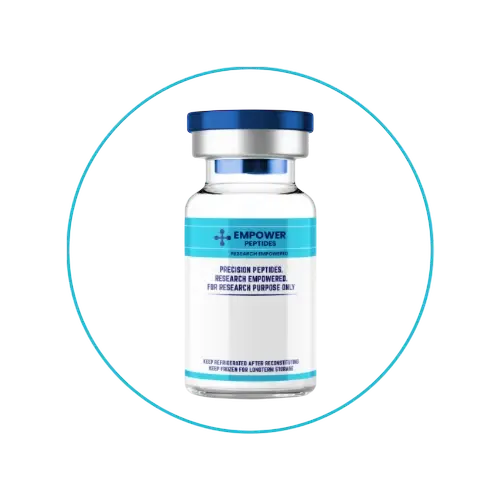
Research-Grade BPC-157 from Empower Peptides
Empower Peptides supplies BPC-157 synthesized via solid-phase peptide synthesis (SPPS) under controlled manufacturing conditions. Every batch is independently verified before shipment, with full documentation available to support IRB-approved protocols and publication-ready research.
| Catalog Name | BPC-157 |
| Peptide Structure | 15-amino acid synthetic pentadecapeptide |
| Formulation Type | Lyophilized powder |
| Purity Verification | HPLC-tested, mass spectrometry confirmed |
| Endotoxin Testing | Sterility standards appropriate for laboratory use |
| Documentation | Batch-specific Certificate of Analysis (CoA) |
| Storage (Lyophilized) | -20°C long-term; room temperature short-term |
| Storage (Reconstituted) | 4°C, protected from light, use within 28 days |
| Intended Use | In vitro and preclinical research only |
| Regulatory Status | Not for human or veterinary use |
Frequently Asked Questions — BPC-157 Peptide
What makes BPC-157 suitable for regenerative biology research?
BPC-157’s multi-tissue activity profile — spanning connective tissue repair, GI mucosal protection, angiogenesis, and neurological models — makes it a broadly applicable tool for researchers studying tissue repair mechanisms and cytoprotective pathways across organ systems.
How does BPC-157 differ from other repair-associated peptides?
Its primary distinction is stability. BPC-157 demonstrates notable resistance to enzymatic degradation in biological environments — particularly gastric conditions — which is unusual among peptides. This stability supports reproducible dosing across both systemic and local administration models.
What is the current state of the human clinical evidence?
The majority of BPC-157 research to date has been conducted in rodent models. No completed Phase III human trial data exists in the public literature as of this writing. The preclinical foundation is substantial and independently replicated, but BPC-157 remains a research chemical without regulatory approval for human therapeutic use.
Why does purity matter when sourcing BPC-157 for research?
Peptide impurities — including residual synthesis reagents, truncated sequences, or oxidation byproducts — can introduce confounding variables, invalidate experimental results, or produce unintended biological activity. Research conclusions depend on knowing precisely what compound was administered, making sourcing a scientific decision, not just a procurement one.
Is BPC-157 available to research institutions through Empower Peptides?
Yes. Empower Peptides supplies research-grade BPC-157 to qualified laboratories, academic institutions, and licensed investigators. Full batch documentation including Certificate of Analysis is provided to support reproducible, publication-ready research outcomes.
Disclaimer: BPC-157 is manufactured and distributed by Empower Peptides exclusively for scientific and preclinical research purposes. This product has not been evaluated by the Food and Drug Administration (FDA) or equivalent regulatory authorities. It is not intended for human consumption, is not a therapeutic drug, and must not be used as a dietary supplement. All research must be conducted by qualified investigators in compliance with applicable institutional, national, and international regulatory guidelines.