


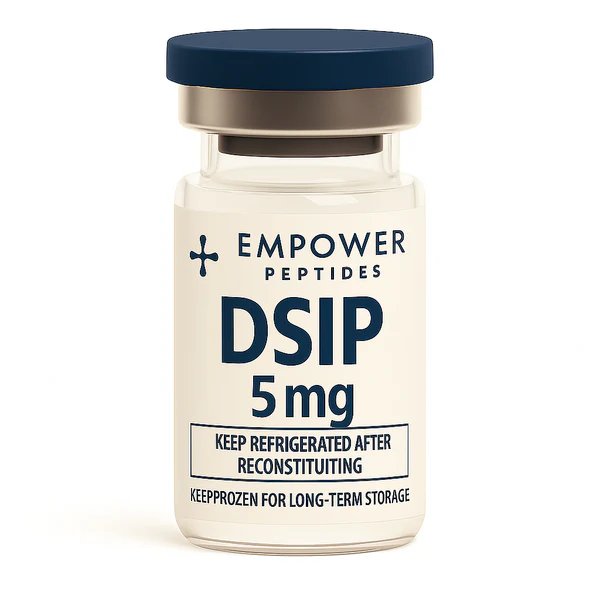
DSIP 5mg (Delta Sleep-Inducing Peptide)
$35.00
Availability: In stock

Availability: In stock
“`html
DSIP – Research Peptide (5mg)
DSIP is a synthetic nonapeptide commonly utilized in laboratory environments for studies involving neuropeptide signaling, peptide structure analysis, and biochemical pathway investigations. Supplied as a lyophilized powder, this research material supports controlled evaluation of peptide stability, molecular interactions, and signaling mechanisms in experimental model systems.
Lyophilized powder supplied in standard laboratory vials.
Not for injection. Not for clinical or therapeutic use.
Features:
- 5mg Lyophilized Powder: Prepared for laboratory-controlled handling and research applications.
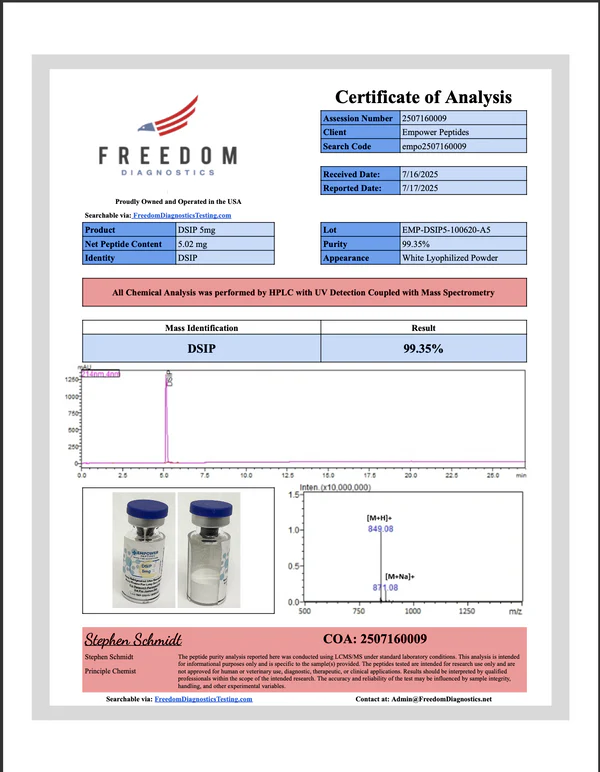
- High Purity (≥ 98%): Suitable for analytical and biochemical research models.
- Stable Storage Profile: Refrigerate after reconstitution; freeze for extended storage stability.
Research Focus:
- Neuropeptide signaling model systems
- Peptide structure and stability analysis
- Biochemical pathway investigations
DSIP 5mg supports controlled laboratory experimentation within neurochemical and peptide-model research frameworks. This compound is intended strictly for scientific study in regulated research environments.
DSIP 5mg – Product Specifications
- Form: Lyophilized Powder
- Amount: 5mg per vial
- Purity: ≥ 98%
- Appearance: White to off-white powder
- Storage: Refrigerate after reconstitution; freeze for long-term storage
🧪 Molecular Information
- Sequence: Trp-Ala-Gly-Gly-Asp-Ala-Ser-Gly-Glu
- Molecular Formula: C35H48N10O15
- Molecular Weight: 848.81 g/mol
- CAS Number: 62568-57-4
DSIP – Frequently Asked Questions (Research Use Only)
This FAQ provides structured technical information regarding the laboratory application, biochemical signaling, and experimental handling of DSIP for controlled research environments.
1. What is DSIP used for in research?
DSIP is used in laboratory studies involving neuropeptide signaling and biochemical pathway analysis. Researchers apply it in controlled models to investigate peptide interactions, signaling mechanisms, and molecular response patterns.
2. What research areas commonly evaluate DSIP?
DSIP is primarily utilized as a neuropeptide research tool. In laboratory settings, it is studied for its structural characteristics, signaling properties, and peptide interaction behavior within controlled experimental models.
3. Why is DSIP supplied as a lyophilized powder?
The lyophilized format improves material stability, preserves peptide integrity, and supports consistent laboratory handling and storage procedures.
4. What types of studies commonly use DSIP in laboratory environments?
DSIP is commonly used in neuropeptide signaling research, peptide stability analysis, and biochemical pathway investigations. It is particularly relevant in experimental models examining peptide structure-function relationships.
5. How should DSIP be stored after reconstitution?
After reconstitution, DSIP should be refrigerated for short-term stability. For extended storage, freezing is recommended to help maintain material integrity during laboratory use.
6. Is DSIP approved for human or animal use?
No. DSIP is a research-use-only laboratory material. It is not for human consumption, not for injection, and not for clinical, therapeutic, or diagnostic use. It should only be handled within qualified laboratory environments.
“`
| Weight | 0.2 oz |
|---|
Refer friends. Earn together
Invite your friends and earn a discount on your next purchase. Your friend also earns a discount! Get started now, by sharing your referral link with your friends.
Refer friends. Earn together
Invite your friends and earn a discount on your next purchase. Your friend also earns a discount! Get started now, by sharing your referral link with your friends.
Related products
- Growth and Performance Peptides
CJC-1295 – Growth and Performance Peptide
Price range: $50.00 through $64.00 Select options This product has multiple variants. The options may be chosen on the product page - Cognitive and Longevity Peptides
SLU-PP-32 Tablets
Price range: $70.00 through $193.00 Select options This product has multiple variants. The options may be chosen on the product page - Antioxidants and Detox Agents
NAD+ Antioxidant and Detox Agent
Price range: $60.00 through $95.00 Select options This product has multiple variants. The options may be chosen on the product page
