

NAD+ Antioxidant and Detox Agent
Price range: $60.00 through $95.00
“`html
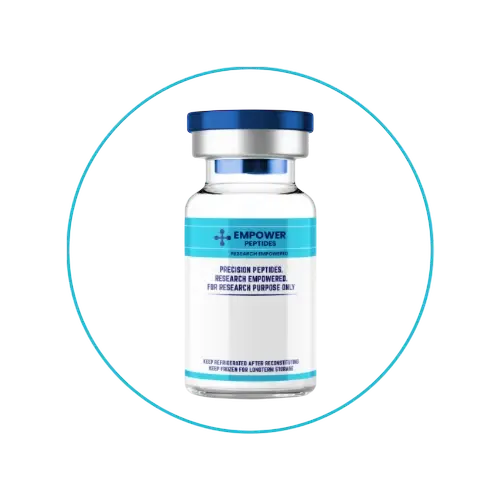
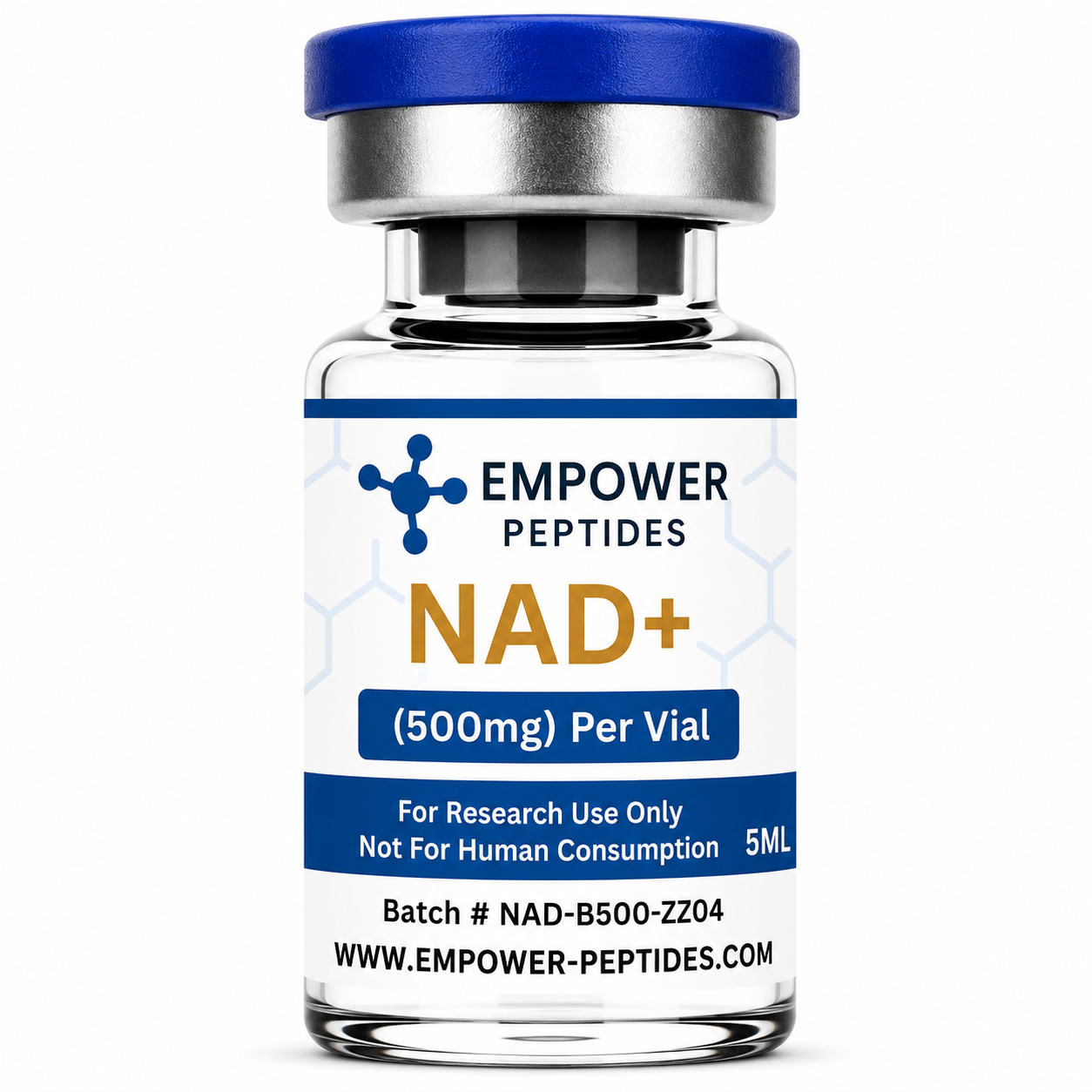
NAD+ (β-Nicotinamide Adenine Dinucleotide) – Research-Grade Compound (520.9 mg)
NAD+ is an essential biochemical cofactor widely examined in laboratory research involving redox systems, electron transfer mechanisms, and cofactor-dependent enzymatic processes. In controlled research environments, it is utilized in studies involving biochemical pathway investigations, cellular processes, and enzymatic activity.
Lyophilized powder supplied in standard laboratory vials.
Not for injection. Not for clinical, therapeutic, or diagnostic use.
🔹 Product Specifications
- Form: Lyophilized Powder
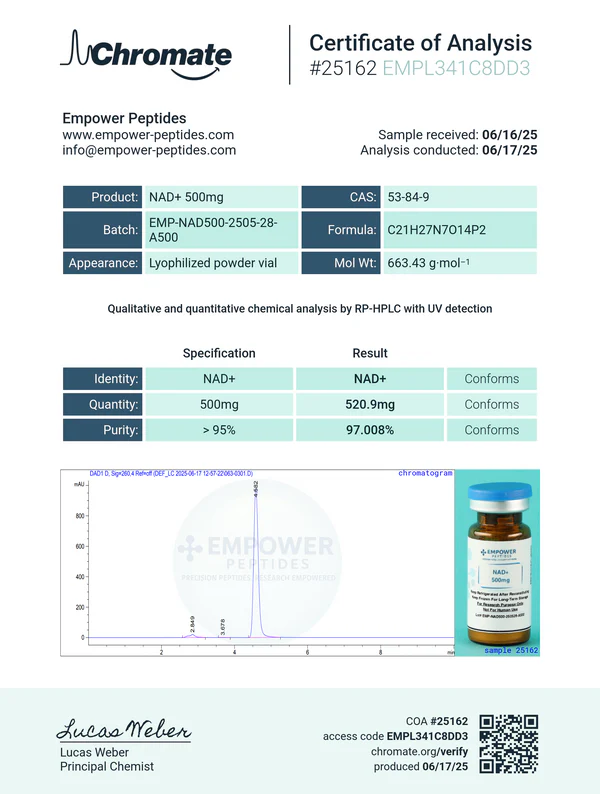
- Purity: 97.008% (verified by third-party analysis)
- Total Content: 520.9 mg per vial
- Appearance: White to off-white powder
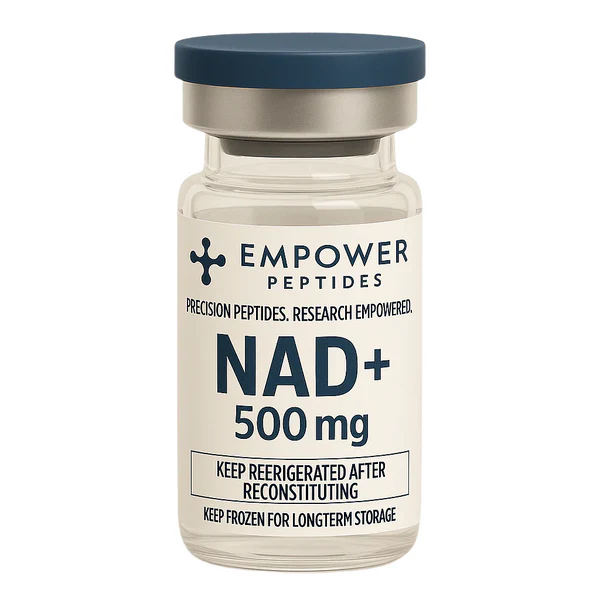
- Storage: Store in a cool, dry environment. Refrigerate after reconstitution.
🧪 Molecular Information
- CAS Number: 53-84-9
- Molecular Formula: C21H27N7O14P2
- Molecular Weight: 663.43 g/mol
🔬 Research Applications
- Redox biochemistry investigations
- Electron transfer mechanism studies
- Cofactor-dependent enzymatic process research
- Biochemical pathway investigations in controlled laboratory environments
💡 Interested in the Science?
Explore how NAD+ is evaluated in research involving redox systems, electron transfer mechanisms, and cofactor-dependent enzymatic processes.
NAD+ – Frequently Asked Questions (Research Use Only)
This FAQ provides structured, research-focused information regarding NAD+ (β-Nicotinamide Adenine Dinucleotide), a research compound supplied as a lyophilized powder for controlled laboratory environments.
1. What is NAD+?
NAD+ is a biochemical cofactor widely studied in laboratory environments involving redox systems, electron transfer mechanisms, enzymatic activity, and cellular biochemical processes.
2. What does NAD+ contain?
NAD+ is supplied as a research-grade compound with a molecular formula of C21H27N7O14P2, molecular weight of 663.43 g/mol, and CAS number 53-84-9. Each vial contains 520.9mg of lyophilized material.
3. What is NAD+ used for in research?
NAD+ is utilized in laboratory research involving redox biochemistry, electron transfer investigations, cofactor-dependent enzymatic processes, and biochemical pathway studies conducted under controlled experimental conditions.
4. Why do researchers study biochemical cofactors?
Biochemical cofactors are studied because they participate in numerous cellular processes and signaling mechanisms. Researchers utilize them to investigate pathway interactions, enzymatic activity, and biochemical system behavior in laboratory environments.
5. How should NAD+ be stored?
Store lyophilized material in a cool, dry environment. After reconstitution, refrigeration is recommended to help maintain material stability and integrity during laboratory use.
6. Is NAD+ approved for human or animal use?
No. NAD+ is a research-use-only laboratory material. It is not for human consumption, not for injection, and not for clinical, therapeutic, or diagnostic use. It should only be handled within qualified laboratory environments.
“`
| Weight | 0.04 oz |
|---|---|
| Strength | 500MG, 1000MG |
Refer friends. Earn together
Invite your friends and earn a discount on your next purchase. Your friend also earns a discount! Get started now, by sharing your referral link with your friends.
Refer friends. Earn together
Invite your friends and earn a discount on your next purchase. Your friend also earns a discount! Get started now, by sharing your referral link with your friends.
Related products
-
Metabolic Research Peptides
GLP-2 – Metabolic Research Peptide
Price range: $75.00 through $238.00 Select options This product has multiple variants. The options may be chosen on the product page -
Recovery and Repair Peptides
GHK-Cu – Recovery and Repair Peptide
Price range: $43.00 through $55.00 Select options This product has multiple variants. The options may be chosen on the product page