


Tesamorelin – Growth and Performance Peptide
Price range: $70.00 through $125.00

Availability: In stock
“`html
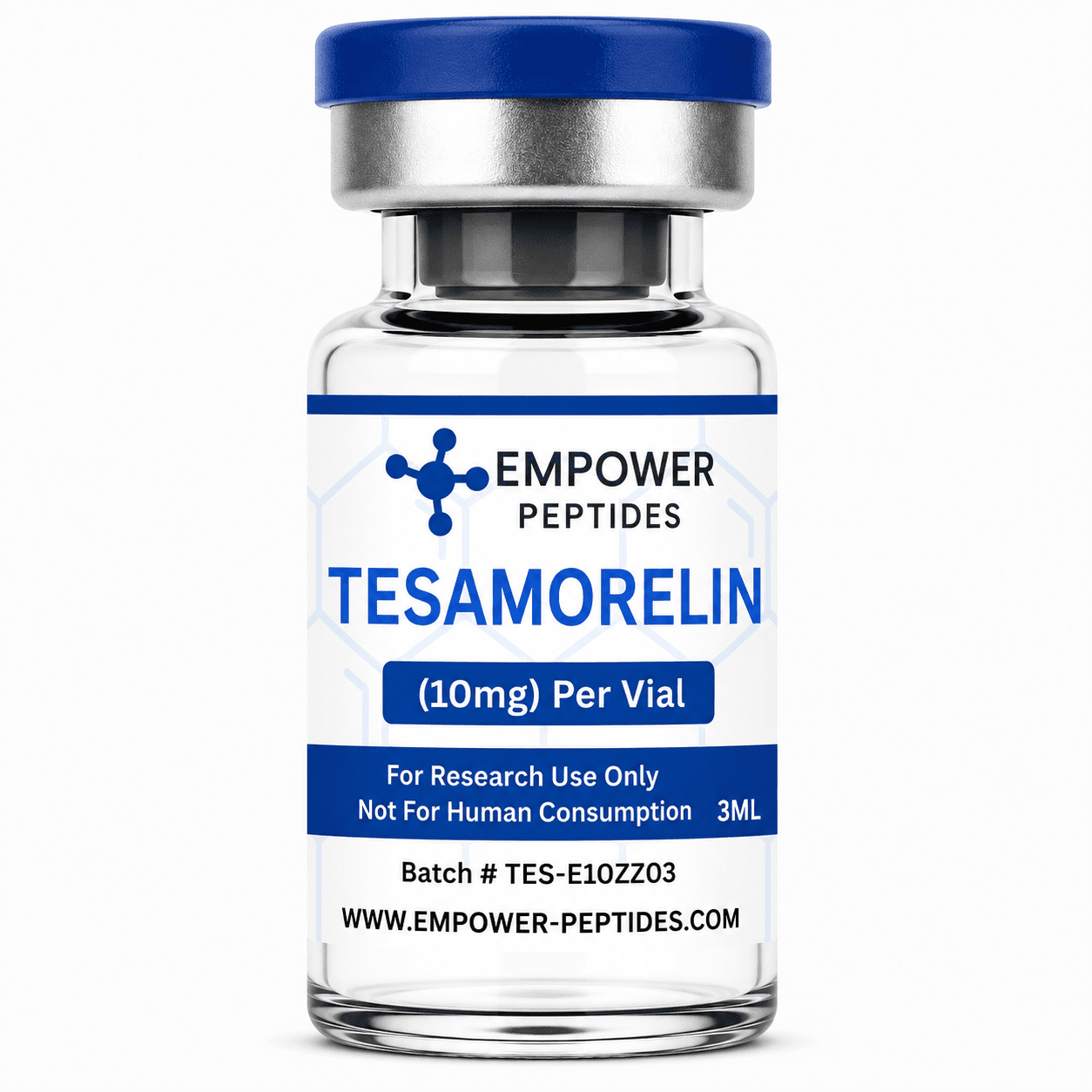
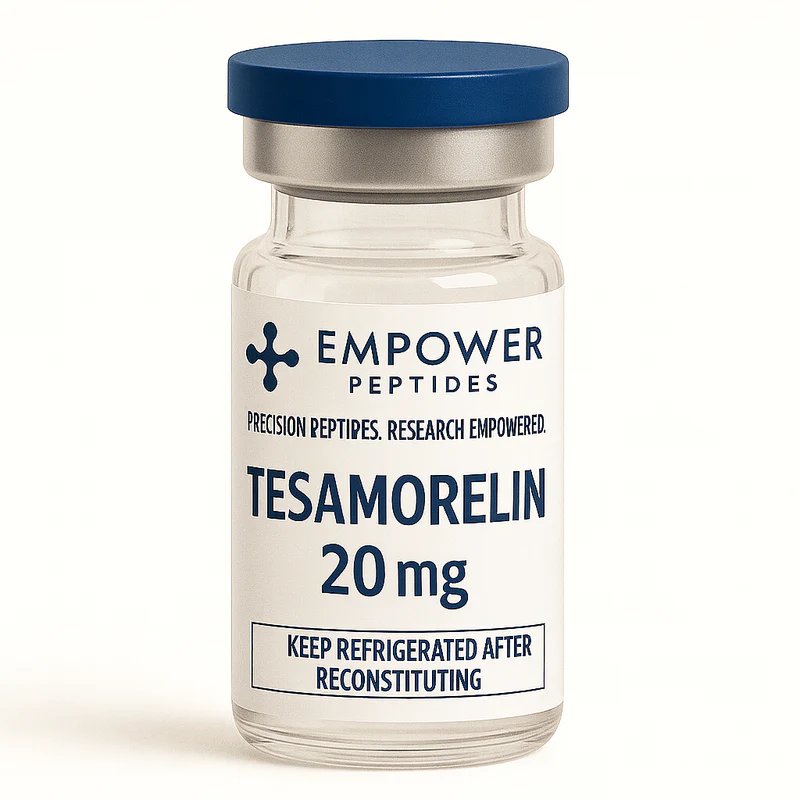
🔬 Tesamorelin – Research Peptide (10mg)
Tesamorelin is a synthetic research peptide studied in controlled laboratory environments involving peptide-receptor interactions, cellular signaling pathways, and endocrine system research models. Its stabilized structure allows researchers to evaluate peptide behavior, signaling mechanisms, and receptor-mediated responses under controlled experimental conditions.
Lyophilized peptide supplied in standard laboratory vials.
Not for injection. Not for clinical or therapeutic use.
🔹 Product Specifications
- Form: Lyophilized Powder
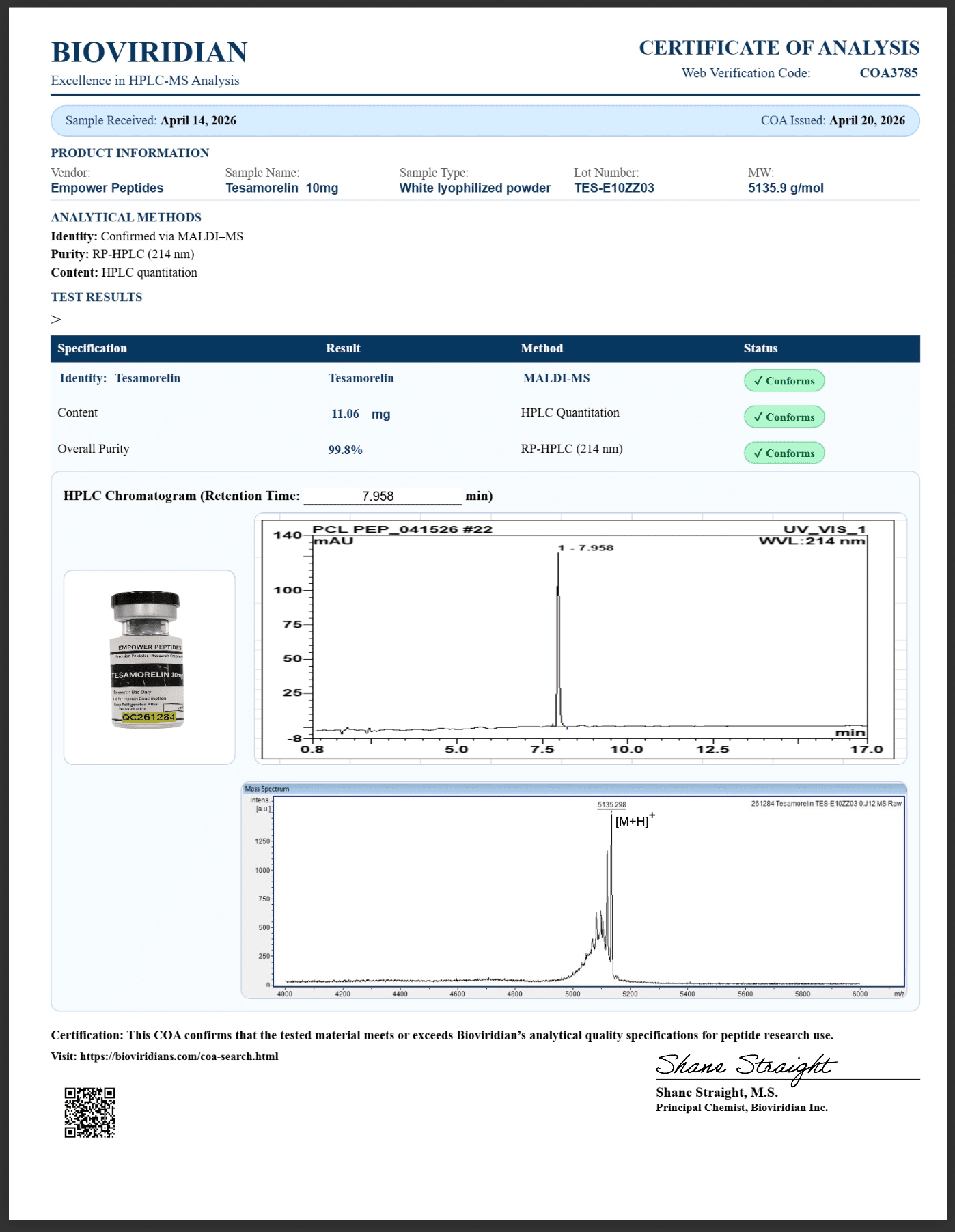
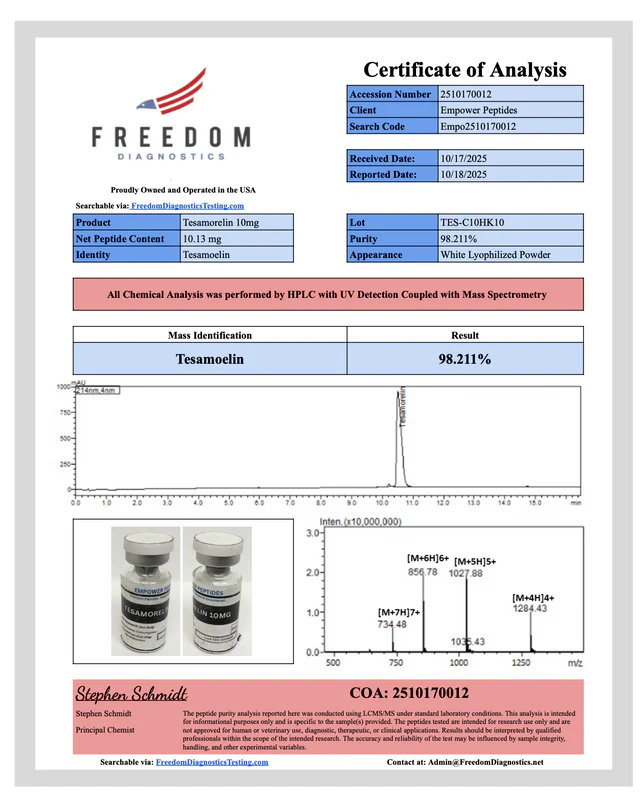
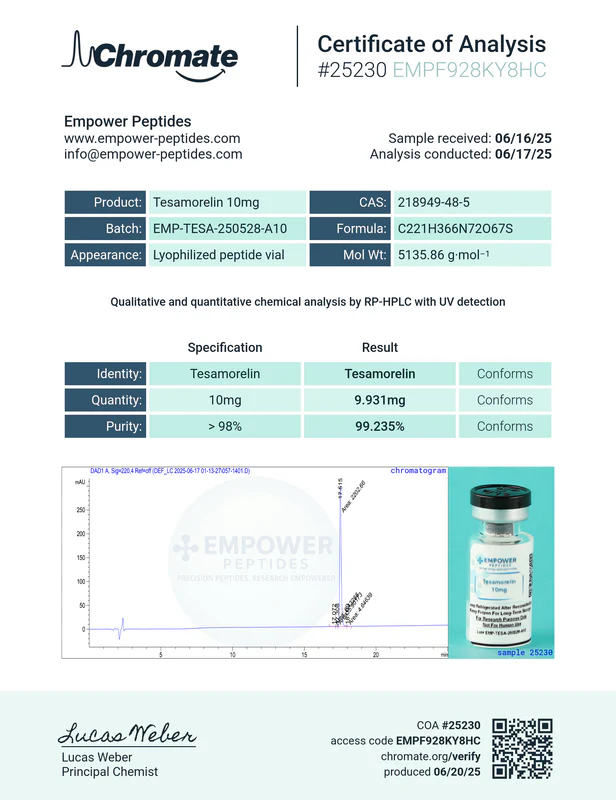
- Amount: 10mg per vial
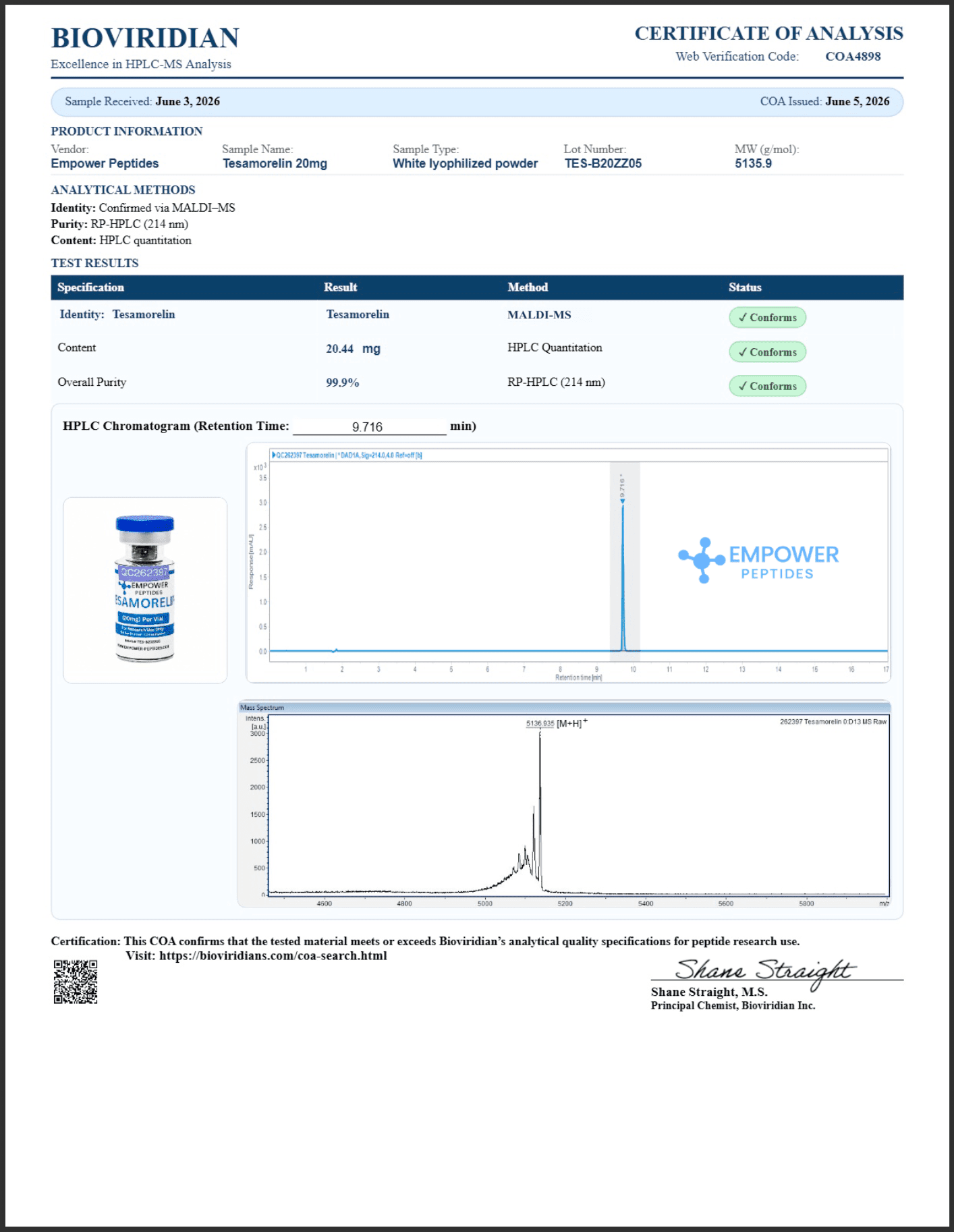
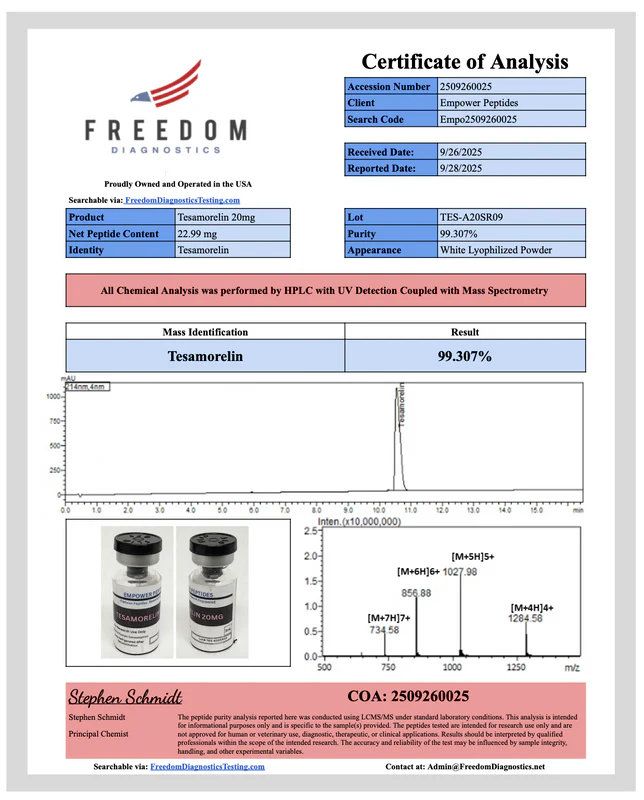
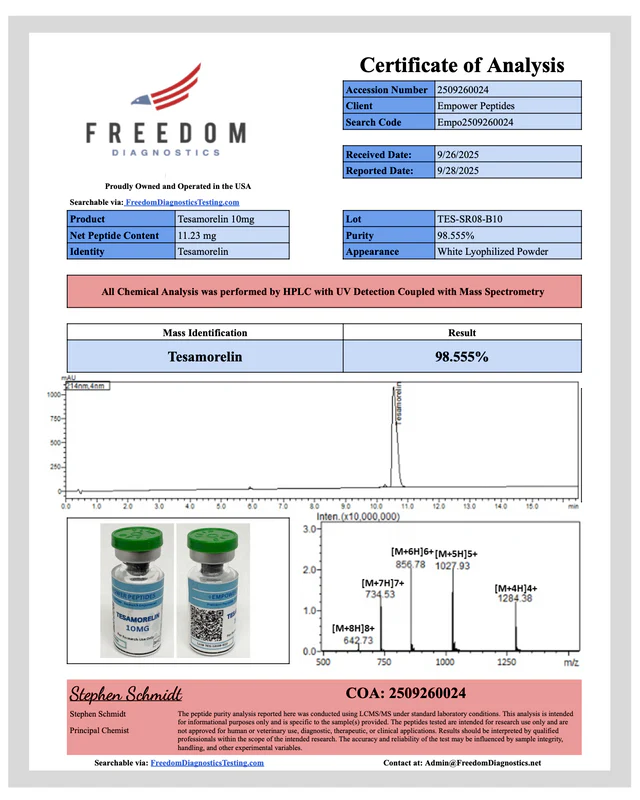
- Purity: ≥ 98%
- Appearance: White to off-white powder
- Storage: Store in a cool, dry place. Refrigerate after reconstitution.
🧪 Molecular Information
- CAS: 218949-48-5
- Molecular Formula: C221H366N72O67S
- Molecular Weight: 5135.89 g/mol
🔬 Research Applications
- Peptide-receptor interaction research
- Cellular signaling pathway investigations
- Endocrine system research models
- Receptor-mediated pathway analysis in controlled laboratory environments
Tesamorelin – Frequently Asked Questions (Research Use Only)
This FAQ provides structured, research-focused information about Tesamorelin, a synthetic research peptide supplied as a lyophilized powder for controlled laboratory environments.
1. What is Tesamorelin?
Tesamorelin is a synthetic research peptide studied in laboratory environments for peptide-receptor interactions, cellular signaling pathways, and endocrine system research models under controlled experimental conditions.
2. What does Tesamorelin contain?
Tesamorelin is supplied as a research-grade peptide with a molecular formula of C221H366N72O67S, molecular weight of 5135.89 g/mol, and CAS number 218949-48-5. It appears as a white to off-white lyophilized powder.
3. What is Tesamorelin used for in research?
Tesamorelin is utilized in non-clinical laboratory research involving peptide-receptor interactions, cellular signaling pathway investigations, endocrine system research models, and receptor-mediated pathway analysis.
4. Why do researchers study synthetic peptide analogues?
Synthetic peptide analogues are studied to evaluate peptide behavior, receptor interactions, signaling mechanisms, and pathway dynamics within controlled laboratory environments.
5. Is Tesamorelin approved for human or animal use?
No. Tesamorelin is a research-use-only laboratory material. It is not for human consumption, not for injection, and not for clinical, therapeutic, or diagnostic use. It should only be handled within qualified laboratory environments.
“`
| Weight | 0.03 oz |
|---|
Refer friends. Earn together
Invite your friends and earn a discount on your next purchase. Your friend also earns a discount! Get started now, by sharing your referral link with your friends.
Refer friends. Earn together
Invite your friends and earn a discount on your next purchase. Your friend also earns a discount! Get started now, by sharing your referral link with your friends.
Related products
- Cognitive and Longevity Peptides
5 Amino -1MQ – Cognitive and Longevity Peptide
Price range: $25.00 through $42.00 Select options This product has multiple variants. The options may be chosen on the product page
